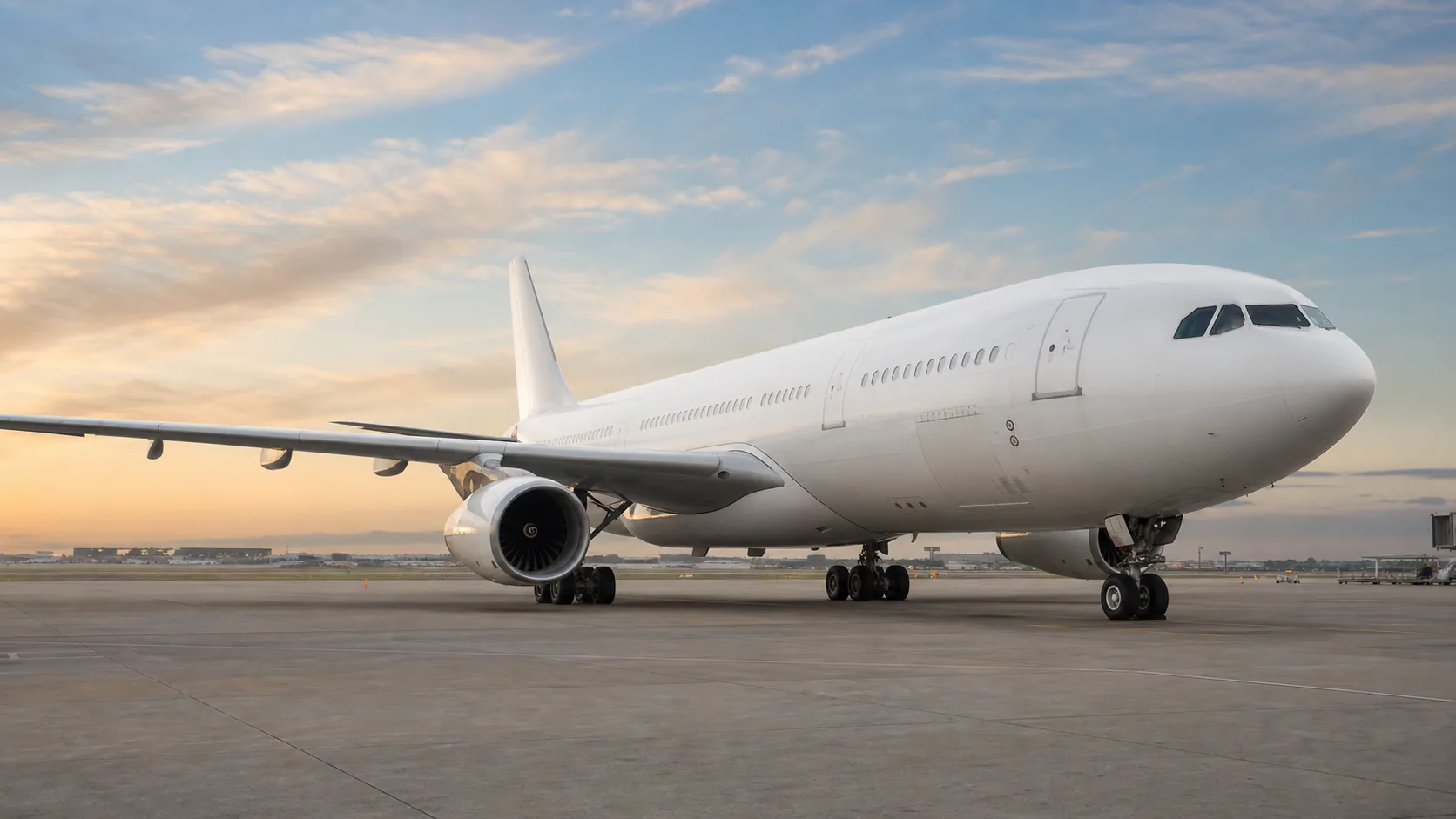
The Airbus A330 is a twin-aisle, twin-engine widebody used on medium-haul, long-haul, leisure, cargo and military tanker missions. Its strength is flexibility rather than one extreme performance headline.
History and development
Airbus launched the A330 alongside the four-engine A340, using a common widebody platform for different long-haul needs.
The A330-300 became a strong medium- and long-haul passenger aircraft, while the shorter A330-200 added range and flexibility.
The A330neo updated the family with newer Rolls-Royce Trent 7000 engines, aerodynamic refinements and a modern cabin while preserving A330 infrastructure familiarity.
Variant-by-variant breakdown
| Variant | What it is used for |
|---|---|
| A330-200 | Shorter long-range variant used by airlines, governments and MRTT tanker derivatives. |
| A330-300 | Longer high-capacity variant strong on medium-haul and dense long-haul routes. |
| A330-200F | Factory freighter version with a distinctive nose-gear blister to optimise deck angle. |
| A330-800/-900 | A330neo variants with updated engines, wing changes and longer-range economics. |
Technical specifications
These are manufacturer reference figures, with the variant and assumptions shown where available. Typical layouts, maximum seating and advertised range describe different things. Ranges quoted by different manufacturers are not necessarily calculated on the same payload or reserve basis; use the exact approved documentation for flight planning.
| Variant / reference | Seating / weight | Published reference | Powerplant / layout |
|---|---|---|---|
| A330-200 | Shorter ceo passenger variant | Long-haul role; cabin and weight options vary | GE CF6, PW4000 or Rolls-Royce Trent 700 |
| A330-300 | Longer ceo passenger variant | Medium/long-haul role; cabin and weight options vary | GE CF6, PW4000 or Rolls-Royce Trent 700 |
| A330-800 | 257-271 passengers in Airbus's typical three-class example | Manufacturer advertised range up to 8,100 nm | Rolls-Royce Trent 7000 |
| A330-900 | 287-303 passengers in Airbus's typical three-class example | Manufacturer advertised range up to 7,350 nm | Rolls-Royce Trent 7000 |
Cabin, route role and operating profile
| Area | Typical setup | Operational meaning | Notes |
|---|---|---|---|
| Cabin | Twin aisle | Usually 2-4-2 economy | Popular passenger comfort layout |
| Cargo | Widebody lower hold | Passenger belly cargo or freighter | Useful on long-haul networks |
| Mission | Medium/long haul | Leisure, network, cargo, tanker | Highly flexible fleet role |
Design and systems features
- The A330 uses a conventional Airbus widebody fly-by-wire cockpit philosophy shared with later Airbus types.
- A 2-4-2 economy cabin is a commercial advantage where passenger comfort matters.
- The neo keeps the basic A330 platform but improves range and fuel economics with newer engines and aerodynamic updates.
Typical operations, routes and operators
- A330s serve transatlantic, Europe-Asia, Middle East, leisure, cargo and high-density regional routes.
- The wider family includes passenger, freighter and military tanker roles; their structures, weights and operating documentation differ.
- The A330neo retains the family lineage while introducing Trent 7000 engines and aerodynamic changes.
Market presence and replacement context
- The A330 overlaps with the Boeing 787 and, on some missions, the 767 and 777.
- Fleet comparisons depend on acquisition terms, cabin density, route performance, maintenance and existing crew arrangements; aircraft age alone does not settle the choice.
Operational themes for study
- Air-data interpretation, automation monitoring, fuel planning and diversion decisions are useful long-haul study themes. Review them through approved aircraft and operator sources.
- This overview does not establish a comparative accident rate or an aircraft safety ranking.
Comparison with similar aircraft
| Aircraft | Where it competes | Practical difference |
|---|---|---|
| Boeing 787 | Long-haul comparison | Different structure and systems architecture; economics require a route and configuration comparison. |
| Airbus A350 | Airbus widebody comparison | Different wing, structure, engines and capacity/range combinations. |
| Boeing 767 | Widebody comparison | Seven-abreast economy is common on the 767 versus eight-abreast on many A330s. |
FAQ
What is the A330 best for?
Flexible medium- and long-haul operations where widebody capacity and belly cargo matter.
What changed with the A330neo?
New Trent 7000 engines, aerodynamic changes and cabin updates improved range and economics.
Is the A330 still relevant?
Yes. Many airlines use A330ceo aircraft effectively, and the A330neo remains in production.
Check your understanding
- Which engine family distinguishes the A330neo from the ceo options?
- Why should a typical three-class seating example not be treated as maximum capacity?
Continue your preparation
- Airbus A350 explained: the composite long-haul Airbus widebody
- Boeing 787 Dreamliner explained: composite long-haul efficiency
- Boeing 757 and 767 explained: the twinjet pair that bridged narrowbody and widebody flying
- Browse all aircraft profiles
- Explore interview preparation topics
Public sources and disclaimer
Manufacturer references checked on 18 October 2026.
This article is an editorial aircraft profile. It is not official aircraft training material and must not replace an AFM, POH, FCOM, QRH, MEL, operator SOP, maintenance manual, regulator document or current type certificate data sheet.
- Airbus A330-800 configuration and key figures
- Airbus A330-900 configuration and key figures
- Airbus aircraft characteristics publications