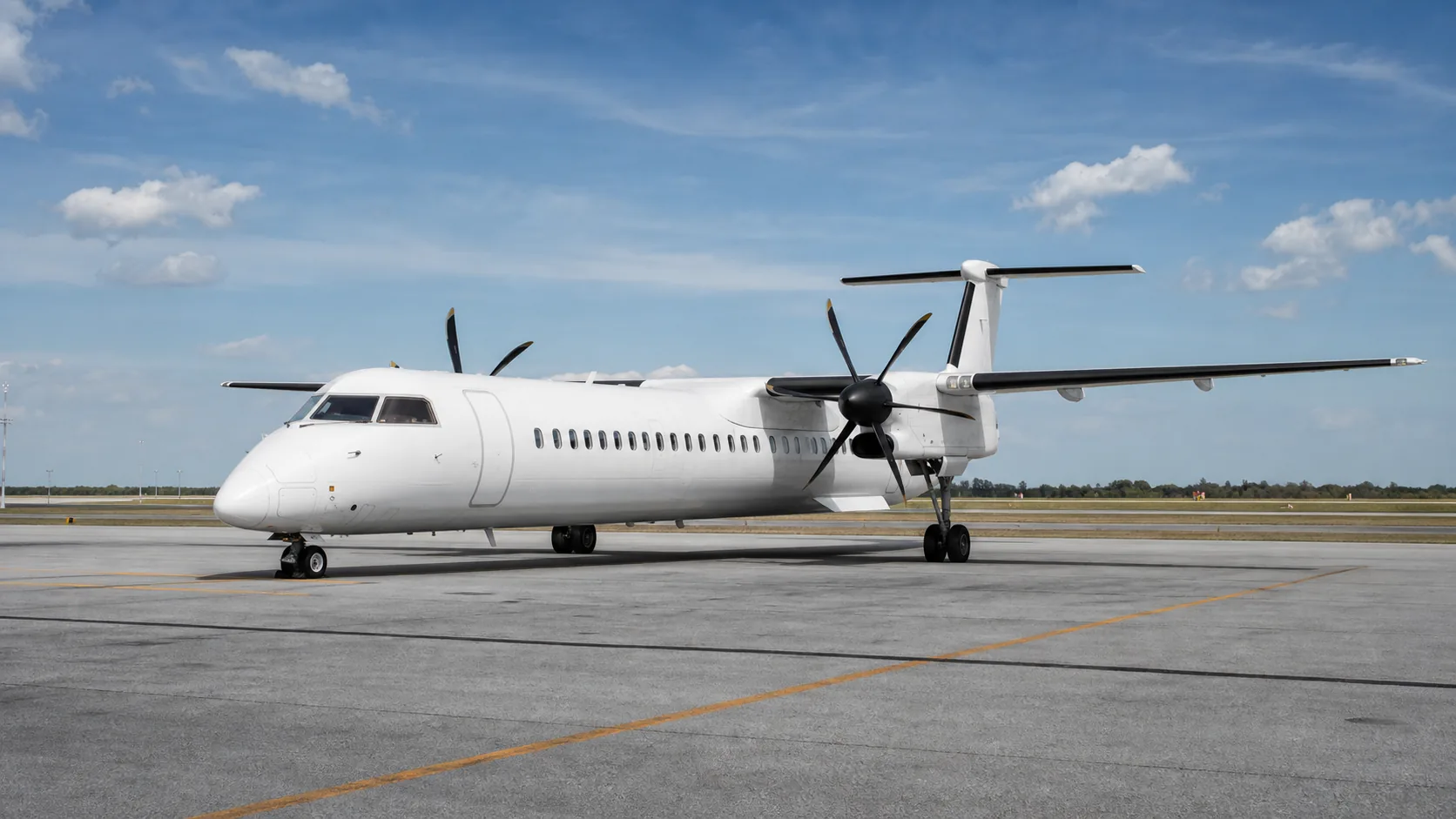
The Dash 8 is a family of Canadian regional turboprops. The Q400, later Dash 8-400, is the largest and fastest member, built for routes where airlines want turboprop economics without giving up too much block time.
History and development
The Dash 8 entered service in the 1980s as a successor to earlier de Havilland regional aircraft.
The -100, -200 and -300 covered smaller regional markets, while the Q400 stretched the family into the 70- to 90-seat category.
The Q name refers to active noise and vibration suppression, a major part of making turboprop cabins more acceptable for airline passengers.
Variant-by-variant breakdown
| Variant | What it is used for |
|---|---|
| Dash 8-100/200 | Smaller early variants used for short community and regional routes. |
| Dash 8-300 | Mid-size model with more seats and range than the earliest Dash 8s. |
| Q400 / Dash 8-400 | Largest variant, typically 74-82 seats and up to 90 seats in high-density layouts. |
| Dash 8-400 special mission | Freighter, firefighting and missionised versions extend the airframe beyond scheduled passenger use. |
Technical specifications
These are manufacturer reference figures, with the variant and assumptions shown where available. Typical layouts, maximum seating and advertised range describe different things. Ranges quoted by different manufacturers are not necessarily calculated on the same payload or reserve basis; use the exact approved documentation for flight planning.
| Variant / reference | Seating / weight | Published reference | Powerplant / layout |
|---|---|---|---|
| Dash 8-300 | Approximately 50-seat class | Earlier, smaller Dash 8 generation | Pratt & Whitney Canada PW123 series |
| Dash 8-400 | 82-seat standard example; optional layouts up to 90 | Full-passenger reference range: 862 nm with 82 passengers, 102 kg each, EHGW basis | PW150A; Dowty R408 propellers |
| Dash 8-400 | BGW MTOW reference: 29,574 kg | Take-off field length: 1,277 m, ISA, sea level, MTOW, BGW | Do not combine this weight basis with other gross-weight options |
| Dash 8-400 | Maximum cruise speed: 360 kt | Maximum cruise altitude: 25,000 ft | July 2026 manufacturer reference figures |
Cabin, route role and operating profile
| Area | Typical setup | Operational meaning | Notes |
|---|---|---|---|
| Cabin | Single aisle turboprop | Usually 2-2 seating | Higher capacity than ATR 72 in some layouts |
| Route role | Short regional | Regional and island networks | Can replace small regional jets on short legs |
| Special missions | Passenger, cargo, firefighting | Flexible airframe | Useful where runway access matters |
Design and systems features
- The Q400 is one of the fastest regional turboprops, narrowing the time gap to regional jets on short sectors.
- Its active noise and vibration suppression system was designed to make turboprop travel feel less harsh in the cabin.
- The high wing and turboprop layout suit regional airports, but the aircraft demands disciplined propeller and power management.
Typical operations, routes and operators
- Dash 8s operate on regional, island and remote-community networks, including sectors where airport access matters.
- The Dash 8-400 combines regional turboprop seating with a relatively high published cruise speed; actual block time depends on the sector.
- Special-mission and firefighting conversions extend the family beyond passenger airline service.
Market presence and replacement context
- The Dash 8-400 and ATR 72 overlap on regional routes, but speed, seating, maintenance, capital cost and the actual sector profile must be compared together.
- Fleet planning also depends on support arrangements, aircraft availability and the exact gross-weight and cabin configuration; one published specification does not describe every Q400.
Operational themes for study
- Propeller/power management, ice-protection concepts and runway planning are relevant study areas; operating actions and limitations belong in the applicable manuals.
- The manufacturer's brochure uses different weight bases for airfield and en-route figures. Mixing those references can produce a misleading performance comparison.
Comparison with similar aircraft
| Aircraft | Where it competes | Practical difference |
|---|---|---|
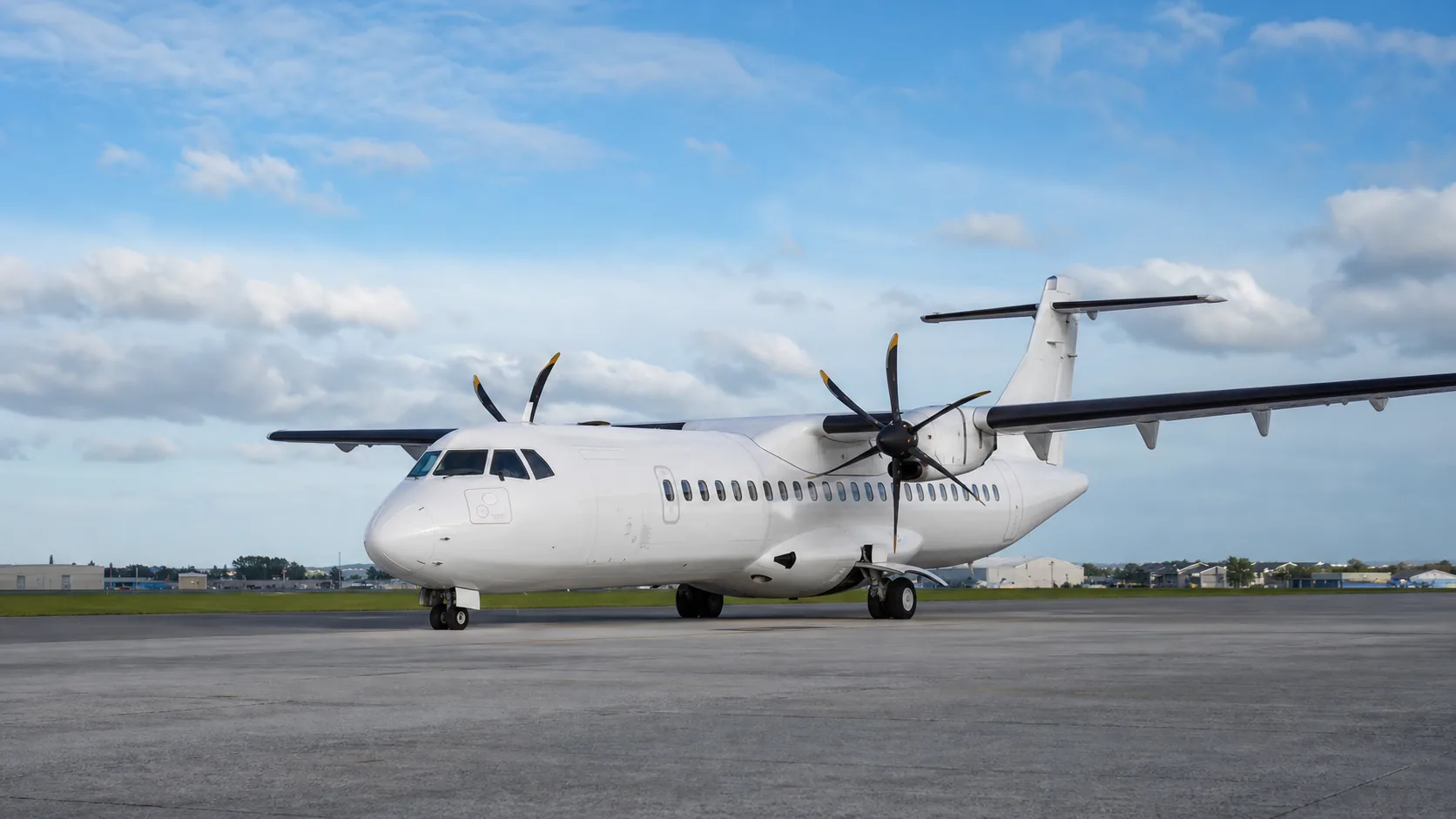
| ATR 72 | Turboprop comparison | Compare published cruise, seating and the same payload/range assumptions; avoid universal cost claims. |
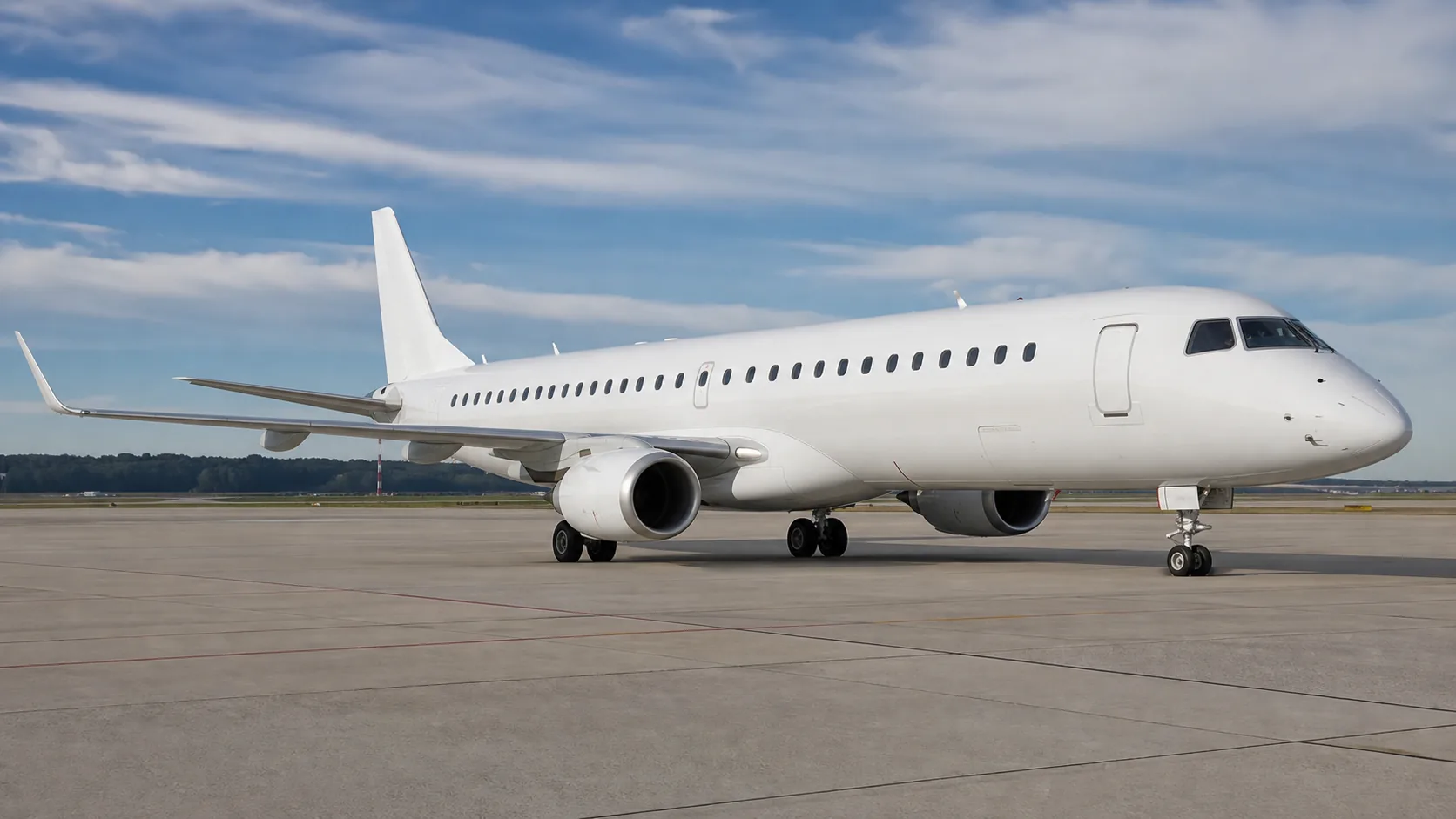
| CRJ / E-Jets | Jet alternative | Different engine installation, cruise performance and fleet constraints. |
| ATR 42 / smaller Dash 8s | Lower-capacity alternative | Serve a different passenger-demand band. |
FAQ
Is the Q400 the same as the Dash 8?
It is the largest Dash 8 variant and is now commonly referred to as the Dash 8-400.
Why choose a Q400 over a jet?
On short sectors, lower fuel burn and runway flexibility can outweigh the jet's speed advantage.
How many seats does a Q400 have?
Typical layouts are in the mid-70s to low-80s, with high-density versions up to 90 seats.
Check your understanding
- Why must the BGW airfield figures and EHGW en-route figures be kept separate?
- What would you compare with an ATR 72 before drawing a route-performance conclusion?
Continue your preparation
- ATR 72 explained: the regional turboprop built for short routes
- Bombardier CRJ Series explained: from CRJ200 to CRJ1000
- Embraer E190 and E195 explained: E-Jet capacity with mainline comfort
- Browse all aircraft profiles
- Explore interview preparation topics
Public sources and disclaimer
Manufacturer references checked on 18 October 2026.
This article is an editorial aircraft profile. It is not official aircraft training material and must not replace an AFM, POH, FCOM, QRH, MEL, operator SOP, maintenance manual, regulator document or current type certificate data sheet.
- De Havilland Canada Dash 8-400 overview
- Dash 8-400 specification sheet, July 2026; BGW/EHGW assumptions on page 2