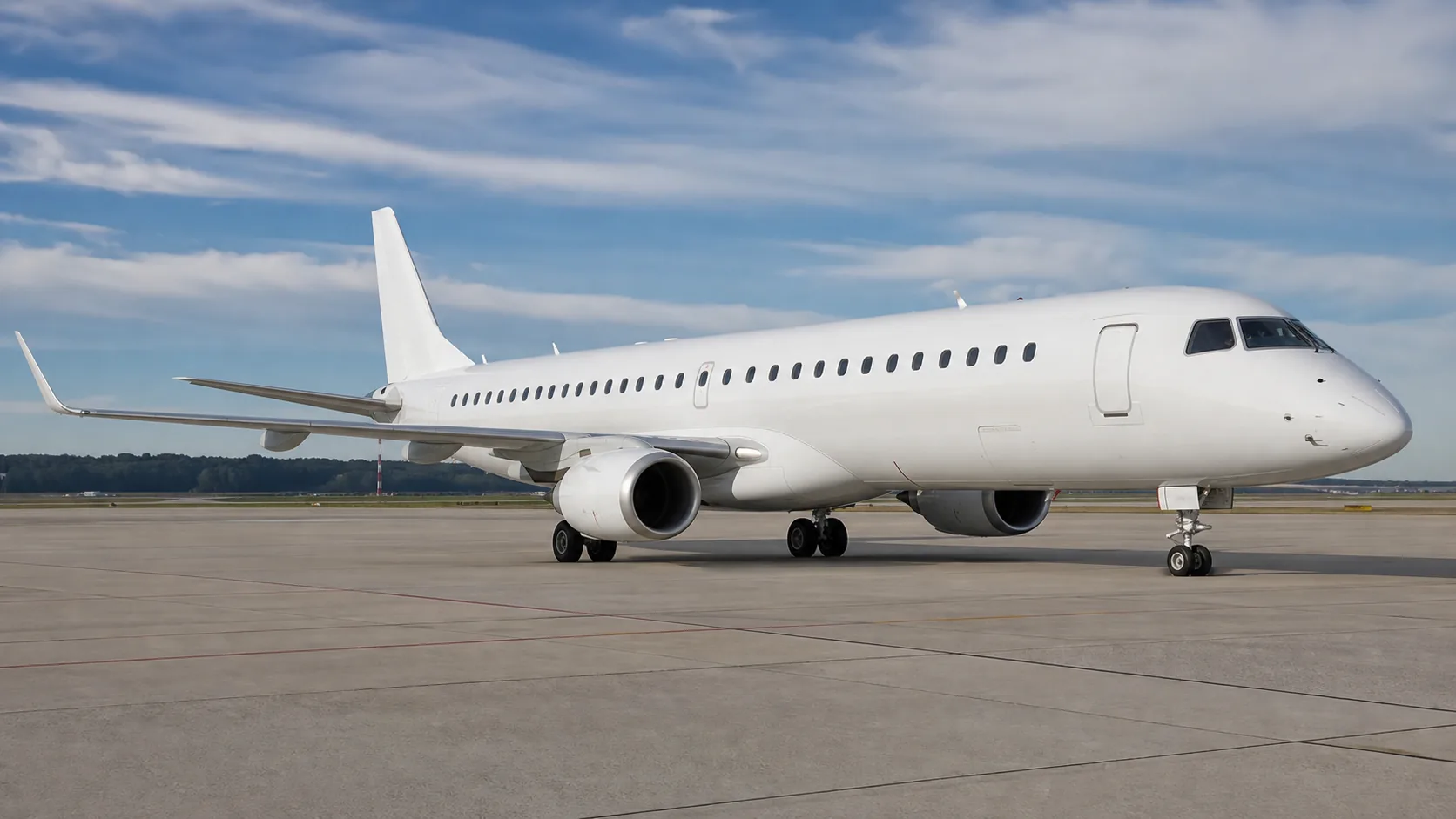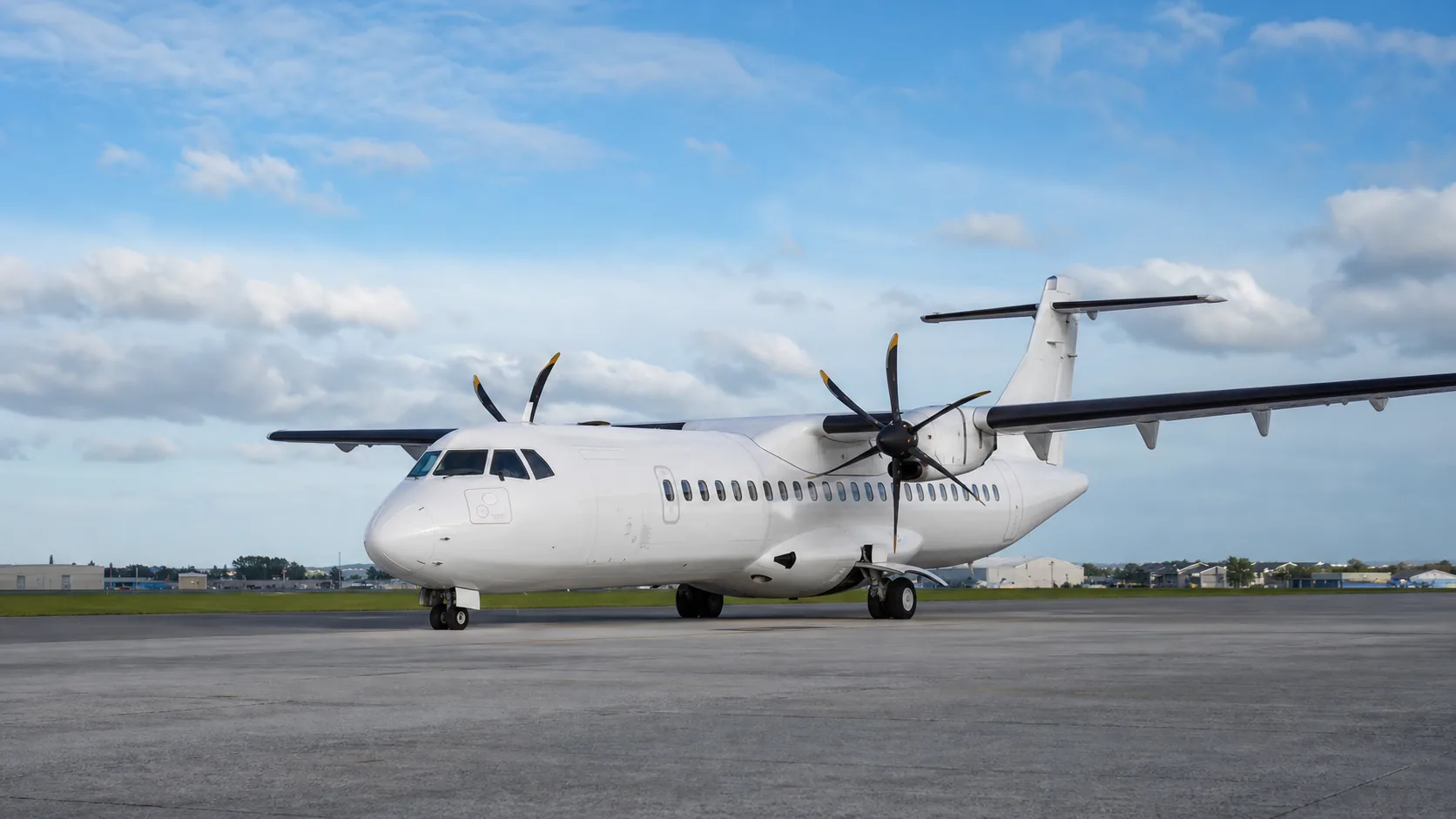
The CRJ Series is a family of regional jets that grew from 50-seat hub feeders into larger 70- to 100-seat aircraft. It became one of the defining aircraft families of North American regional airline flying.
History and development
The CRJ lineage began with the Canadair Regional Jet, adapting business-jet heritage into scheduled airline service. The CRJ100 preceded the CRJ200.
Later CRJ700, CRJ900 and CRJ1000 variants increased capacity and introduced different wings, engines and systems. The CRJ550 is a 50-seat derivative of the larger CRJ700 platform.
Mitsubishi Heavy Industries acquired the CRJ programme in 2020 and established MHIRJ. New-aircraft production has ended; the installed fleet continues to receive programme and aftermarket support.
Variant-by-variant breakdown
| Variant | What it is used for |
|---|---|
| CRJ100/200 | Early 50-seat regional jets; the CRJ200 uses GE CF34-3B1 engines. |
| CRJ550 | A 50-seat configuration based on the longer CRJ700 platform; seat count alone does not identify the fuselage or its operating limits. |
| CRJ700 | The 70-seat class, with a manufacturer maximum of 78 passengers. |
| CRJ900 | The larger regional variant, with up to 90 passengers; some operators configure it for 76 seats under labour-agreement constraints. |
| CRJ1000 | The longest CRJ variant, with a manufacturer maximum of 104 passengers. |
Technical specifications
These are manufacturer reference figures, with the variant and assumptions shown where available. Typical layouts, maximum seating and advertised range describe different things. Ranges quoted by different manufacturers are not necessarily calculated on the same payload or reserve basis; use the exact approved documentation for flight planning.
| Variant / reference | Seating / weight | Published reference | Powerplant / layout |
|---|---|---|---|
| CRJ200 | Maximum 50 passengers | Length: 26.77 m | GE CF34-3B1 |
| CRJ550 | Maximum 50 passengers | Length: 32.3 m | GE CF34-8C5B1 |
| CRJ700 | Maximum 78 passengers | Length: 32.3 m | GE CF34-8C5B1 |
| CRJ900 | Maximum 90 passengers | Length: 36.2 m | GE CF34-8C5 |
| CRJ1000 | Maximum 104 passengers | Length: 39.1 m | GE CF34-8C5A1 |
Cabin, route role and operating profile
| Area | Typical setup | Operational meaning | Notes |
|---|---|---|---|
| Cabin | Single aisle | 2-2 seating | Narrower than E-Jets |
| Mission | Hub feed | Short regional sectors | Scope-clause driven fleets |
| Configuration | 50 to 100 seats | Premium cabins on some CRJ700/900s | Regional airline branding varies |
Design and systems features
- Rear-mounted engines and a T-tail define the CRJ silhouette and cabin noise profile.
- The narrow fuselage helps trip cost but limits cabin comfort compared with E-Jets and A220s.
- CRJ700/900 aircraft gained better economics than early 50-seat jets by adding seats without jumping to mainline aircraft size.
Typical operations, routes and operators
- CRJs are used for feeder routes, business markets, frequency protection and smaller airports linked to large hubs.
- The CRJ900 remains important where airline labour agreements or demand levels favour 76-seat operations.
- Older CRJ200 fleets have declined as fuel prices and crew costs made 50-seat jets less attractive.
Market presence and replacement context
- CRJs and Embraer E-Jets both use four-abreast economy cabins, with different cabin dimensions, engine installations and capacity ranges.
- With new CRJ production ended, support of the installed fleet and aircraft availability matter more than comparisons of new-aircraft sales.
Operational themes for study
- Study winter-operation planning, contaminated-runway assumptions and the systems of the exact CRJ variant from approved sources.
- Commercial scope-clause seating limits and certified aircraft limits answer different questions; neither should be inferred from the other.
Comparison with similar aircraft
| Aircraft | Where it competes | Practical difference |
|---|---|---|
| Embraer E175/E190 | Regional jet comparison | Both offer 2-2 seating, with different cabin dimensions and engine installations. |
| Dash 8-400 | Turboprop alternative | Propeller-driven aircraft with a different cruise-speed and mission profile. |
| Airbus A220 | Small-mainline alternative | Five-abreast cabin and a different capacity/range envelope. |
FAQ
Is the CRJ still produced?
No. Production ended, but support continues and many aircraft remain in service.
Why are CRJ200s disappearing?
Fifty-seat jet economics became difficult as fuel, crew and maintenance costs rose.
Why do airlines still use CRJ900s?
They fit 70- to 76-seat regional contracts, hub-feed demand and smaller markets.
Check your understanding
- Why can a CRJ550 and CRJ200 both seat 50 passengers despite different fuselage lengths?
- How does a scope-clause seating limit differ from the manufacturer maximum?
Continue your preparation
- Embraer E190 and E195 explained: E-Jet capacity with mainline comfort
- Dash 8 and Q400 explained: De Havilland's high-capacity turboprop
- Airbus A220 explained: the small single-aisle built around efficiency
- Browse all aircraft profiles
- Explore interview preparation topics
Public sources and disclaimer
Manufacturer references checked on 18 October 2026.
This article is an editorial aircraft profile. It is not official aircraft training material and must not replace an AFM, POH, FCOM, QRH, MEL, operator SOP, maintenance manual, regulator document or current type certificate data sheet.