Non-type-rated First Officer
This filter includes only roles explicitly recorded as not requiring a type rating. Confirm training costs, licence acceptance and all other criteria with the employer.
View confirmed non-type-rated requirementsRole directory
Find First Officer jobs and compare the requirements that decide whether you can apply: licence acceptance, total time, aircraft experience, type rating and work authorisation. Open each vacancy for its full requirements and official application route.
Requirements at a glance
Total-time figures are listing requirements, not time on type. Read every condition in the individual vacancy.
Application briefing
Compare total time, multi-engine time, licence, medical, and type-rating requirements.
Review each airline's stated right-to-work and base expectations before applying.
Prepare for technical, CRM, competency, and simulator stages while the vacancy is open.
Choose your route
This filter includes only roles explicitly recorded as not requiring a type rating. Confirm training costs, licence acceptance and all other criteria with the employer.
View confirmed non-type-rated requirementsMatch the aircraft rating and recency conditions. Hours on type and total flight time are different measures.
View type-rated First Officer vacanciesCompare First Officer listings stating a minimum of 1,000 total hours or less. This is not a guarantee of entry-level eligibility; unstated total-time requirements are excluded.
Compare stated requirements up to 1,000 hoursCompare the licence, flying experience and work authorisation in each Canadian posting.
Explore pilot jobs in CanadaOpen roles
Application guide
A total-time minimum is different from PIC, multiengine, multicrew, turbine or time-on-type experience. For example, a requirement for 500 hours on type is not a 500-hour total-time vacancy. Compare your logbook against every stated threshold and check the employer's recency conditions.
A type-rated position requires the stated rating or aircraft experience. A non-type-rated opening explicitly accepts candidates without that rating; check who provides training and any published conditions. When a requirement is not specified, YPI labels it as unknown rather than treating the role as NTR. A type rating does not replace licence, medical or work-rights requirements.
Build a concise account of your flying background and motivation for the operator. Review technical subjects, CRM examples and simulator briefing discipline relevant to the advertised role. Use public employer information to understand the application process; independent practice material does not establish the airline's current assessment format.
Not necessarily. A cadet route may include paid training, selection stages and a conditional path to employment. Check the exact programme terms instead of treating it as a direct-entry job.
Only where every advertised condition is met. A 500-hour requirement might mean time on type rather than total flight time. Use the low-time guide to compare training routes and experience categories.
From application to assessment
A strong application starts with eligibility. A strong selection continues with deliberate technical, competency, and simulator practice.
Preparation library
A380-800 specifications, engine suffixes and real airline seating. Explains 853 versus current 868 evacuation approval, the 575-tonne variants and 2H2E controls.
Read briefingA worked V1 interview exercise: explain reject timing, separate clearway from stopway and identify why revised performance leaves a 60 m shortfall.
Read briefingThe four A340 models compared with sourced dimensions, engines, upper mass limits and dated cabin/range examples. Includes a worked airport-stand case.
Read briefingPrepare before the invitation arrives
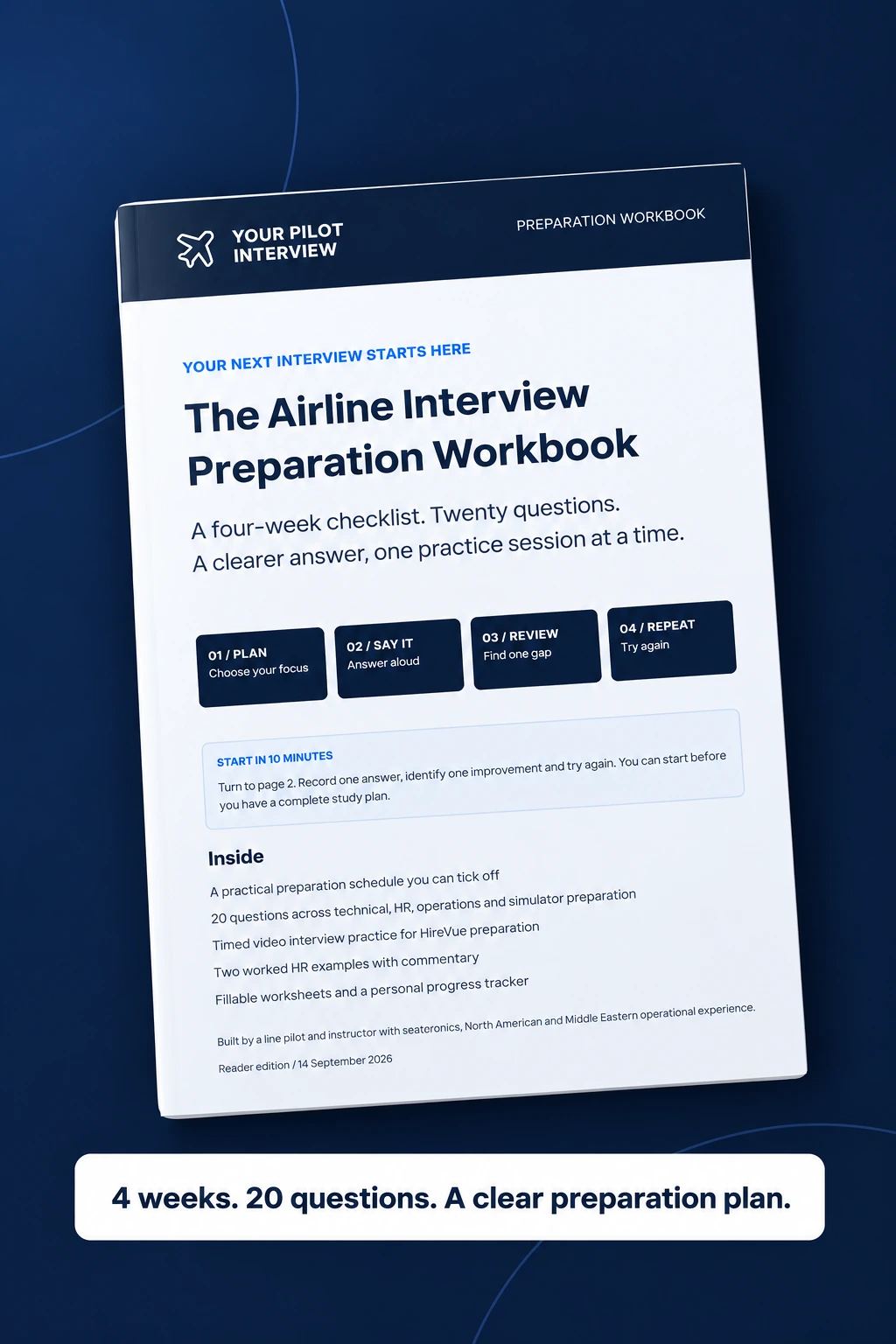
Free 31-page PDF with model answers, examiner tips and a 4-week preparation plan.