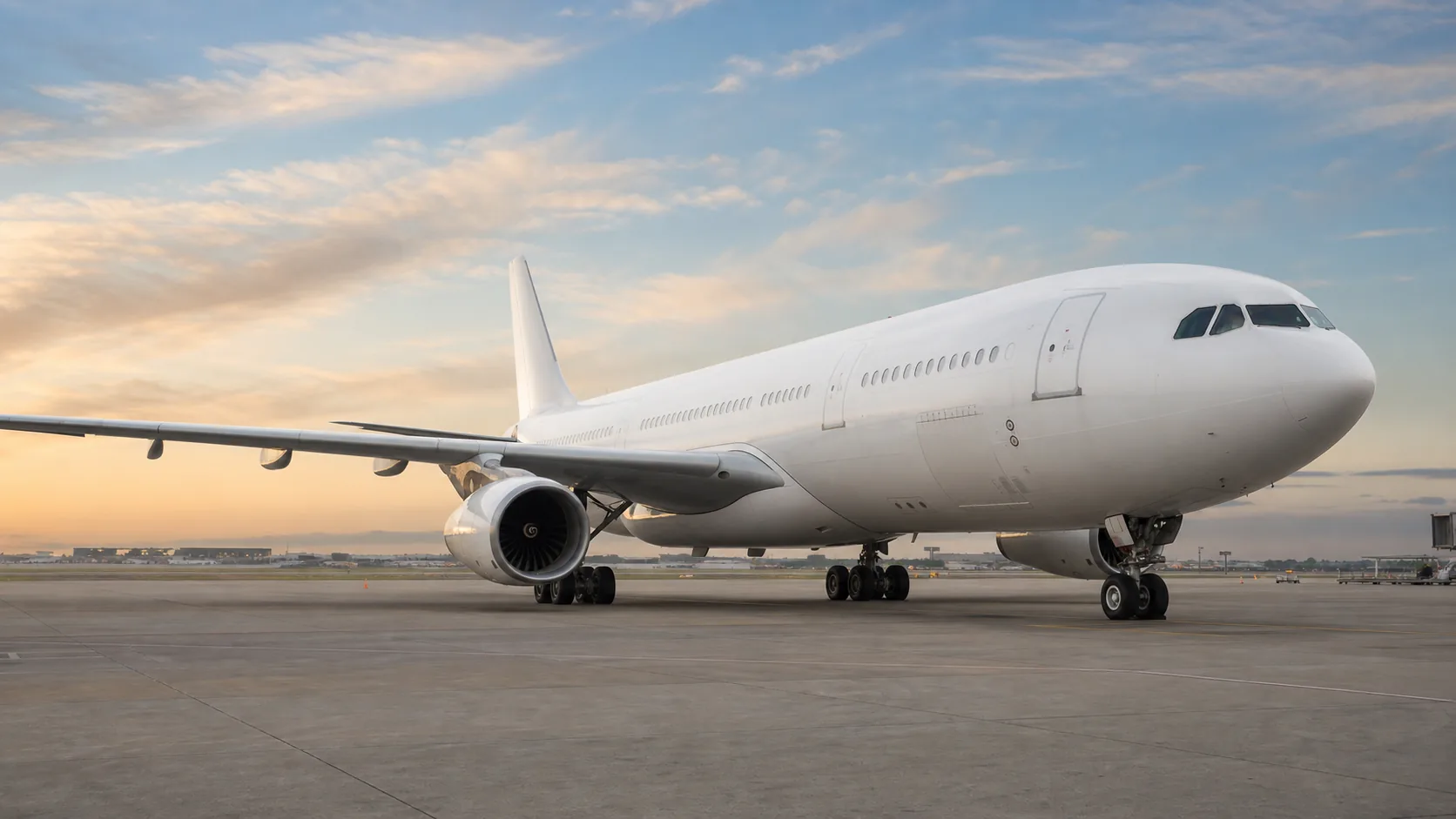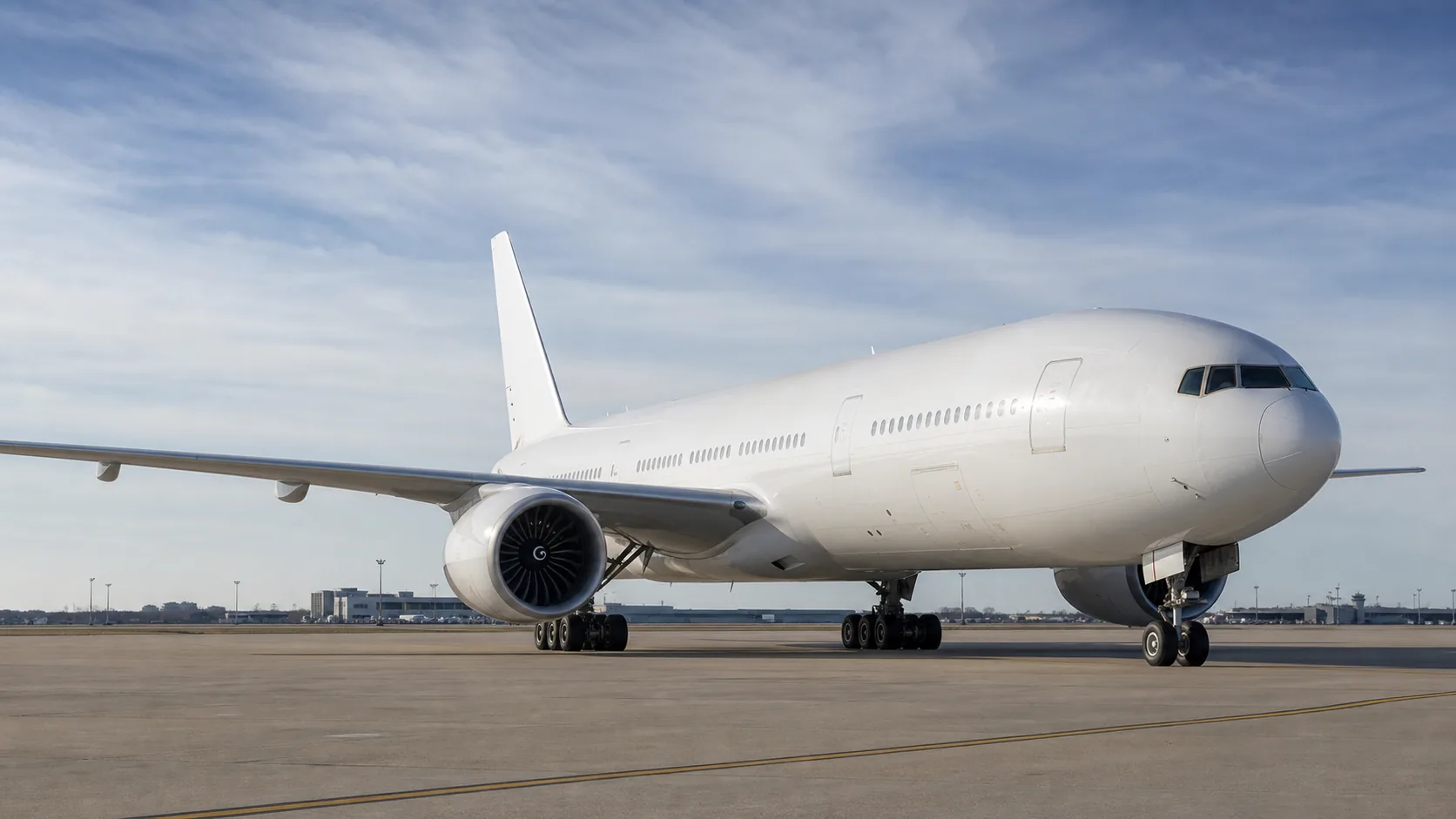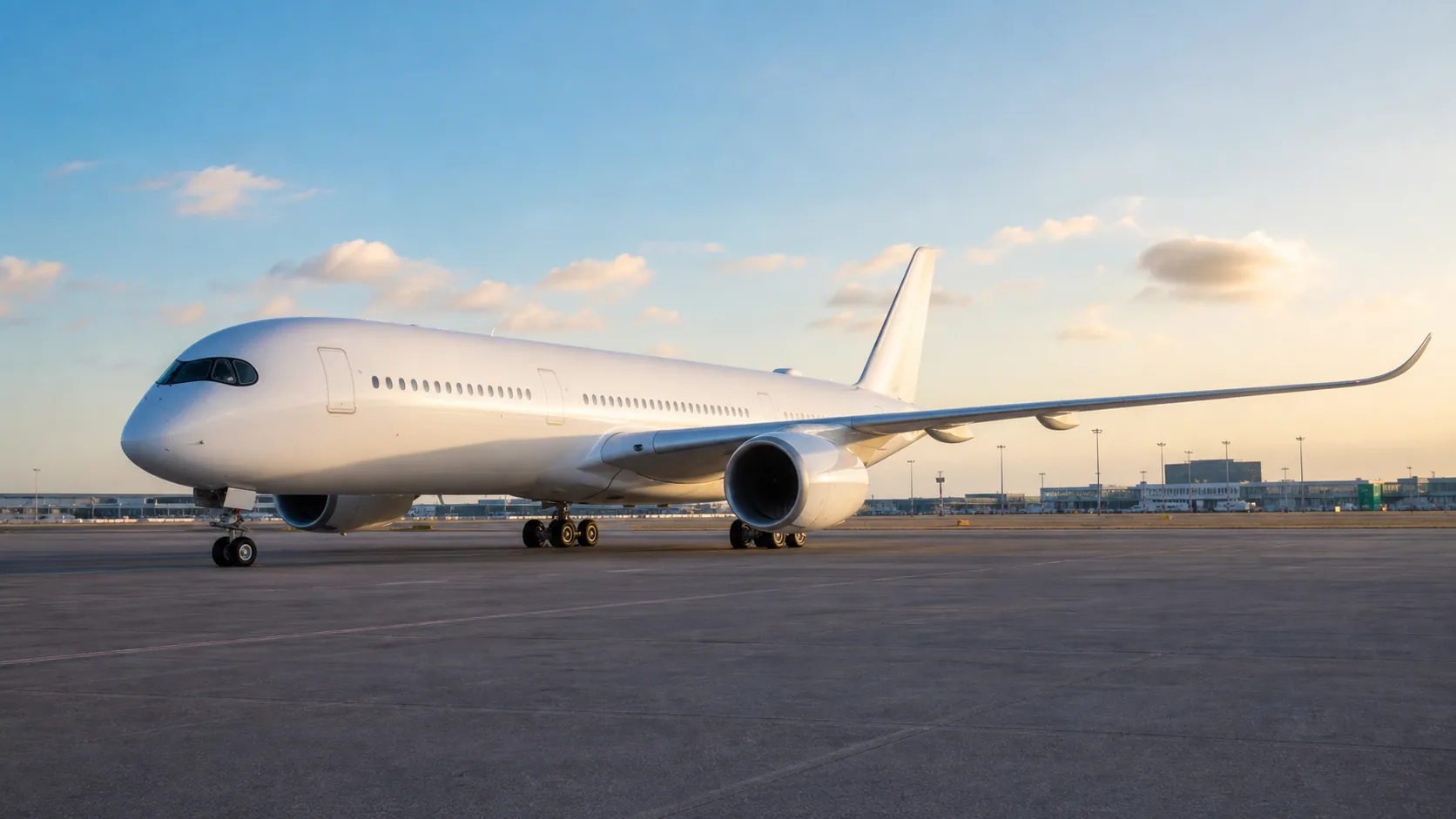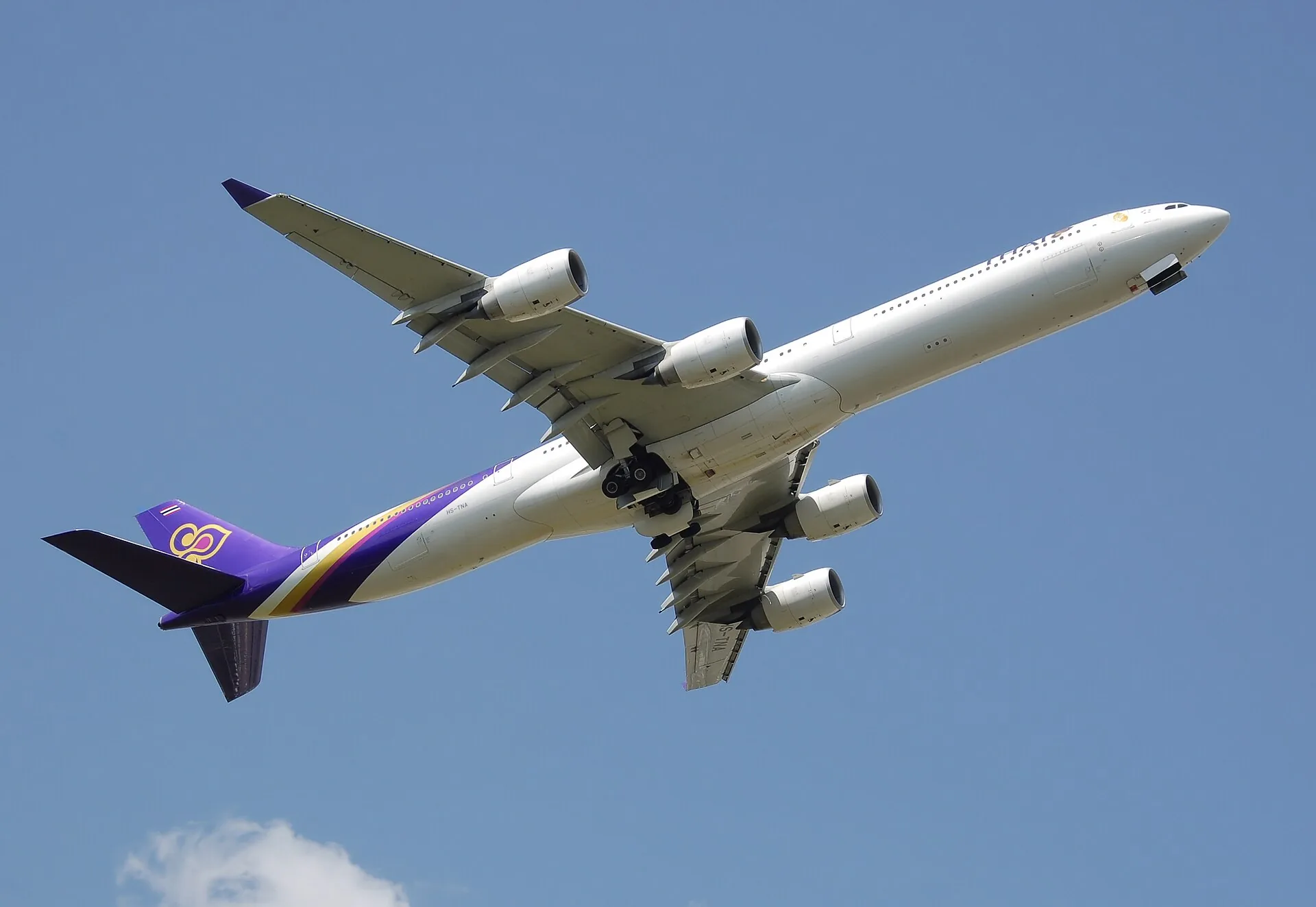
The Airbus A340 family contains two quite different-looking pairs. The -200 and -300 have relatively small CFM56 engines beneath a 60.3-metre-span wing. The later -500 and -600 have larger Trent engines, a larger wing and much higher approved weights. The -600 adds a particularly long fuselage; the -500 concentrates more of its capability on range.
All four are four-engine, twin-aisle passenger aircraft. That family description is useful, but it is too broad to explain which engine, cabin or airport footprint an individual A340 has. The most useful first step is to identify the suffix.
The four A340 models
| Model | Approximate overall length | Wingspan | Engine family | Main distinction |
|---|---|---|---|---|
| A340-200 | 59.4 m | 60.30 m | Four CFM56-5C | Shorter original model |
| A340-300 | 63.7 m | 60.30 m | Four CFM56-5C | Longer original model |
| A340-500 | 67.9 m | 63.45 m | Four Rolls-Royce Trent 500 | Later ultra-long-range model |
| A340-600 | 75.4 m | 63.45 m | Four Rolls-Royce Trent 500 | Later high-capacity, stretched model |
The rounded lengths use the overall side-view dimensions in Airbus's airport planning drawings: A340-200/-300 and A340-500/-600, Section 2-2-0. Airbus notes that drawing dimensions depend on aircraft attitude and weight. Engine families are confirmed in EASA TCDS A.015, Issue 28.
Those measurements make the visual difference between a -300 and a -600 concrete. The latter is approximately 11.7 metres longer in these planning references and has about 3.15 metres more span. It therefore needs more than a simple change of engine description in an airport or fleet briefing.
Specifications, cabin sizes and range references
The family was sold for different capacity-and-distance combinations. The figures below deliberately distinguish certified upper mass limits from historical commercial examples.
| Reference | A340-200 | A340-300 | A340-500 | A340-600 |
|---|---|---|---|---|
| Upper takeoff mass listed in EASA's model sections | 275 t for -213 | 276.5 t for -313 | 380 t | 380 t |
| Historical three-class seating example | 240 | 295 | 313 | 380 |
| Historical published maximum-range example | 14,800 km | 13,700 km | 16,700 km | 14,600 km |
Mass limits come from EASA's January 2026 certificate; lower variants and aircraft-specific eligibility apply. The cabin and range examples come from the Airbus/EADS 2004 programme description, page 14. They describe contemporary marketing references, rather than every delivered cabin or weight standard. They should not be combined with a different weight variant to imply a new payload-range result.
For a sourced cruise reference, Airbus's A340-600 payload-range example with RB211 Trent 556 engines uses Mach 0.82 at 39,000 ft in ISA conditions. That is the assumption for the illustrated calculation, rather than a fixed cruise schedule for every A340 flight. See Airbus's planning manual, Section 3-2-1, page 2.
The certificate specifies a minimum flight crew of two. Its maximum operating altitude is 41,100 ft for the -200 and 41,450 ft for the -300, -500 and -600. The actual cruise level depends on the flight's mass and conditions. A certified upper altitude is not necessarily an efficient or available initial cruise altitude.
An airline cabin can also differ considerably from a three-class reference. Fewer, more spacious premium seats reduce the installed total; denser layouts increase it within the applicable approvals. That is why “an A340 carries 380 passengers” is a poor family-wide answer. Even the historical example refers specifically to the -600.
Two engines or four, from a shared programme
Airbus developed the twin-engine A330 and four-engine A340 together to serve different markets. The original aircraft shared a wing design and fuselage cross-section, as Airbus describes in its historical programme account.
The A330 is therefore the natural starting point for understanding the A340's family relationship. Similarity was intended to reduce development and operating complexity, including the work involved in qualifying crews across related aircraft. It did not make the aircraft physically identical or give them interchangeable performance.
Lufthansa received its first A340 in 1993, as the airline records in its fleet chronicle. The aircraft offered long-haul capability in a period when the approvals and route opportunities available to twin-engine aircraft differed from those of later decades.
Airbus's planning literature presented the absence of a twin-engine ETOPS certification requirement as an A340 selling point. That historical advantage needs its context. Four engines did not remove the need for diversion planning, suitable airports or an operator's applicable approvals. It changed one part of the aircraft-and-route approval problem. Airbus's A340 planning manual records the manufacturer's positioning.
The -500 and -600 were more than stretches
The later pair used the Trent 500 as their sole engine family. Rolls-Royce identifies that role in its Trent 500 description. Exact certified installations include Trent 553 variants on the A340-541, Trent 556A2-61 on the -542, and Trent 556 or 560 variants across the -600 models. EASA's model and engine tables provide the precise pairings.
Their missions also diverged. Airbus's contemporary programme account describes the -500 as an ultra-long-range aircraft and the -600 as the higher-capacity development. The -600 began deliveries in July 2002. A shorter fuselage within this pair left the -500 with a different balance between cabin capacity, fuel and mission length. The 2004 programme description explains those intentions.
The shared flight-deck philosophy could conceal important systems changes. In its investigation involving A340-600 G-VATL, the UK AAIB notes that the -500/-600 retained the earlier family's basic cockpit layout and display philosophy while introducing differences, including a significant fuel-system redesign. The AAIB's aircraft description, Section 1.6.2, is a particularly clear source for this point.
For a pilot, familiar displays help with orientation. They still have to be connected to the correct system diagram and logic. A familiar fuel indication does not establish that fuel moves between tanks in the same way as on an earlier aircraft.
Worked case: a stand that fits a -300 may not fit a -600
Imagine an early airport-planning screen that allows a 61-metre aircraft span and has enough room for a 65-metre-long aircraft. These are invented limits for a geometry exercise, rather than an airport approval standard.
An A340-300's approximate 60.3-metre span and 63.7-metre overall length fall below both initial limits. An A340-600's 63.45-metre span and approximately 75.4-metre overall length exceed both. Calling them members of the same family would not solve the mismatch.
The next stage needs more than a larger rectangular box. During a turn, the main-gear tracks differ from the nose-gear track. The inside main gear can cut inside it, while the tail and outer wing trace their own swept paths. Bridge positions, service roads and adjacent aircraft also matter. Airbus supplies separate turning and clearance drawings for these purposes in its airport planning manuals.
The exercise explains why flight-deck commonality and airport compatibility are different questions. One concerns how an aircraft is operated; the other concerns where its structure and equipment actually pass. A crew familiar with an earlier model still needs the longer aircraft's ground-handling references.
Comparing the A340 with later long-haul aircraft
The Boeing 777 and Airbus A350 offer useful comparisons for large twin-engine long-haul operation. A fair comparison starts with the route, payload and cabin standard. Engine count alone cannot establish the trip cost, and seats alone cannot establish the revenue.
For a long route, additional fuel also adds mass that must itself be carried. The aircraft's maximum fuel volume, structural mass limits and payload-range relationship therefore need to be read together. A very long published range can be valuable for a particular network without being the best use of the aircraft on every shorter sector.
The four-engine A380 provides a different comparison again. Its two passenger decks offer substantially more cabin space. The A340-600's striking length should not be mistaken for an equivalent passenger capacity: floor area, fuselage cross-section and cabin layout matter as well as length.
A340 questions
What are the four main A340 versions?
The -200 and -300 form the original CFM56-powered pair. The later -500 and -600 use Trent 500 engines and a larger wing. Within the later pair, the -500 emphasised ultra-long range and the -600 higher cabin capacity.
Does every A340 have Rolls-Royce engines?
No. The -200 and -300 use CFM56-5C engines. Trent 500 engines power the -500 and -600. The full model suffix identifies the certified engine installation more precisely.
Is the A340-600 longer than an A380?
Yes, using the approximate overall planning dimensions: about 75.4 metres for the A340-600 against about 72.7 metres for the A380. The A380 is substantially wider in span and has two full passenger decks, so length alone gives a misleading capacity comparison.
How many passengers does an A340 carry?
It depends on the model and airline cabin. Airbus's historical three-class examples ranged from 240 in the -200 to 380 in the -600. Those examples are cabin layouts, rather than a single family-wide seating limit.