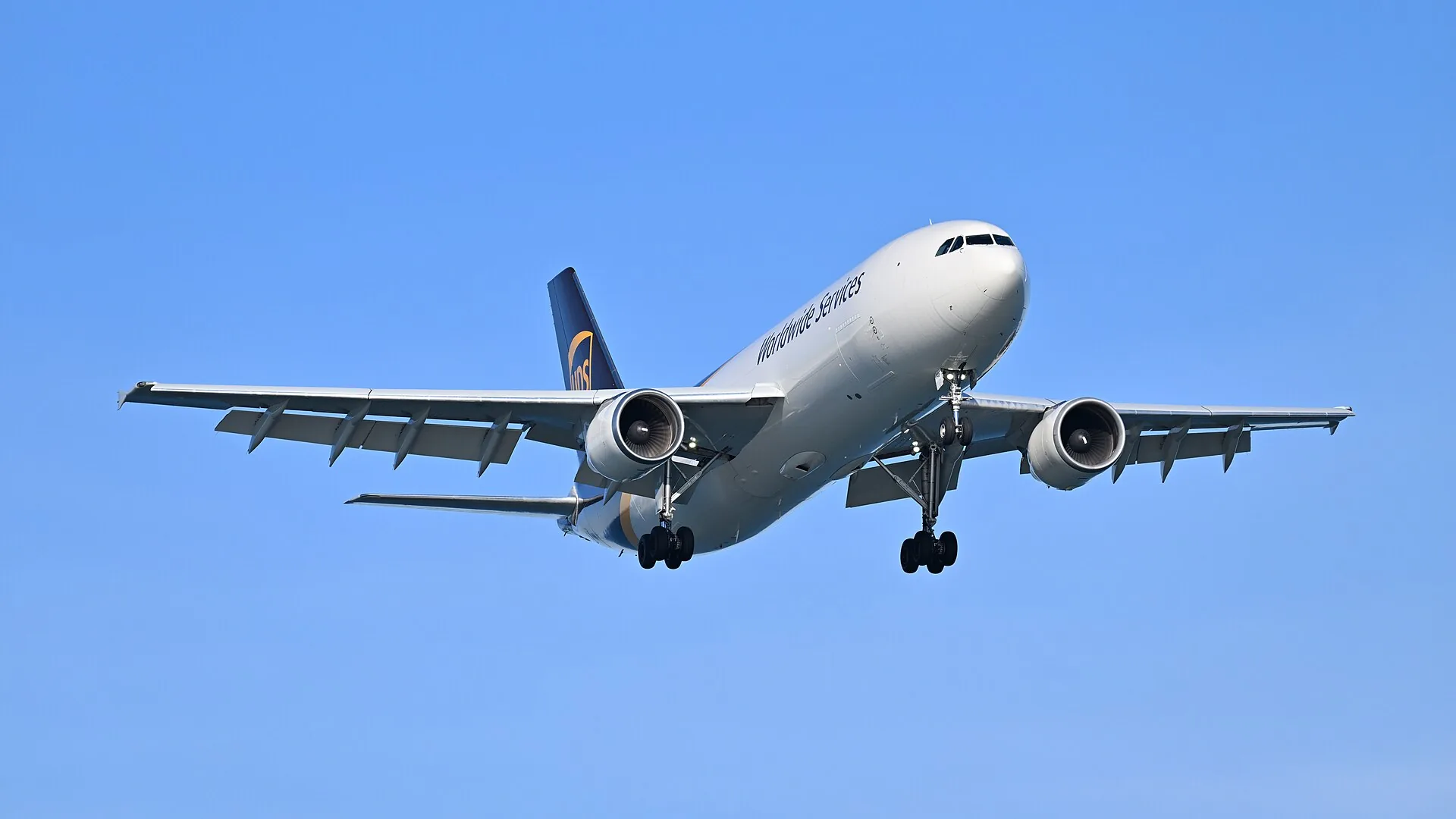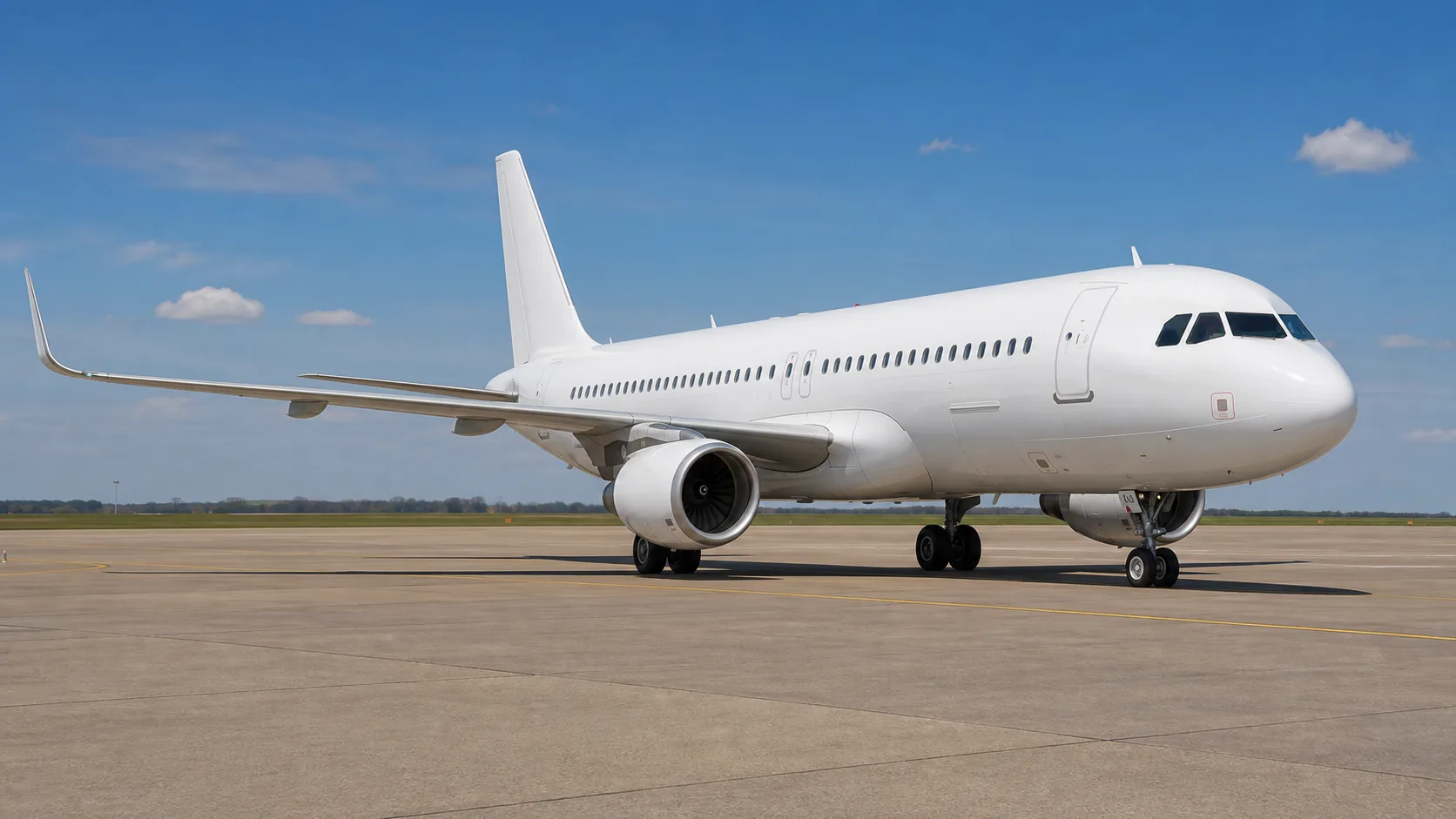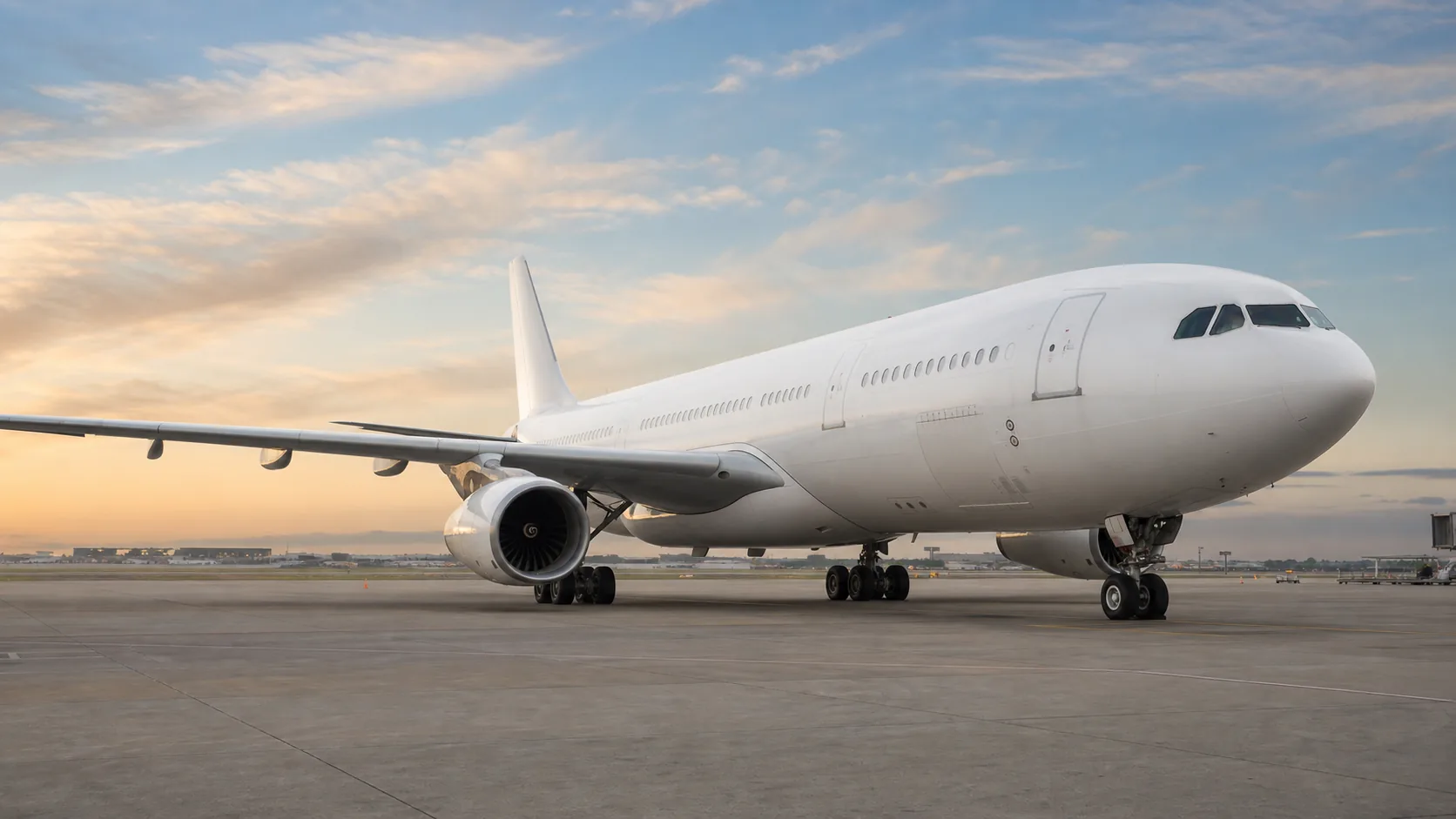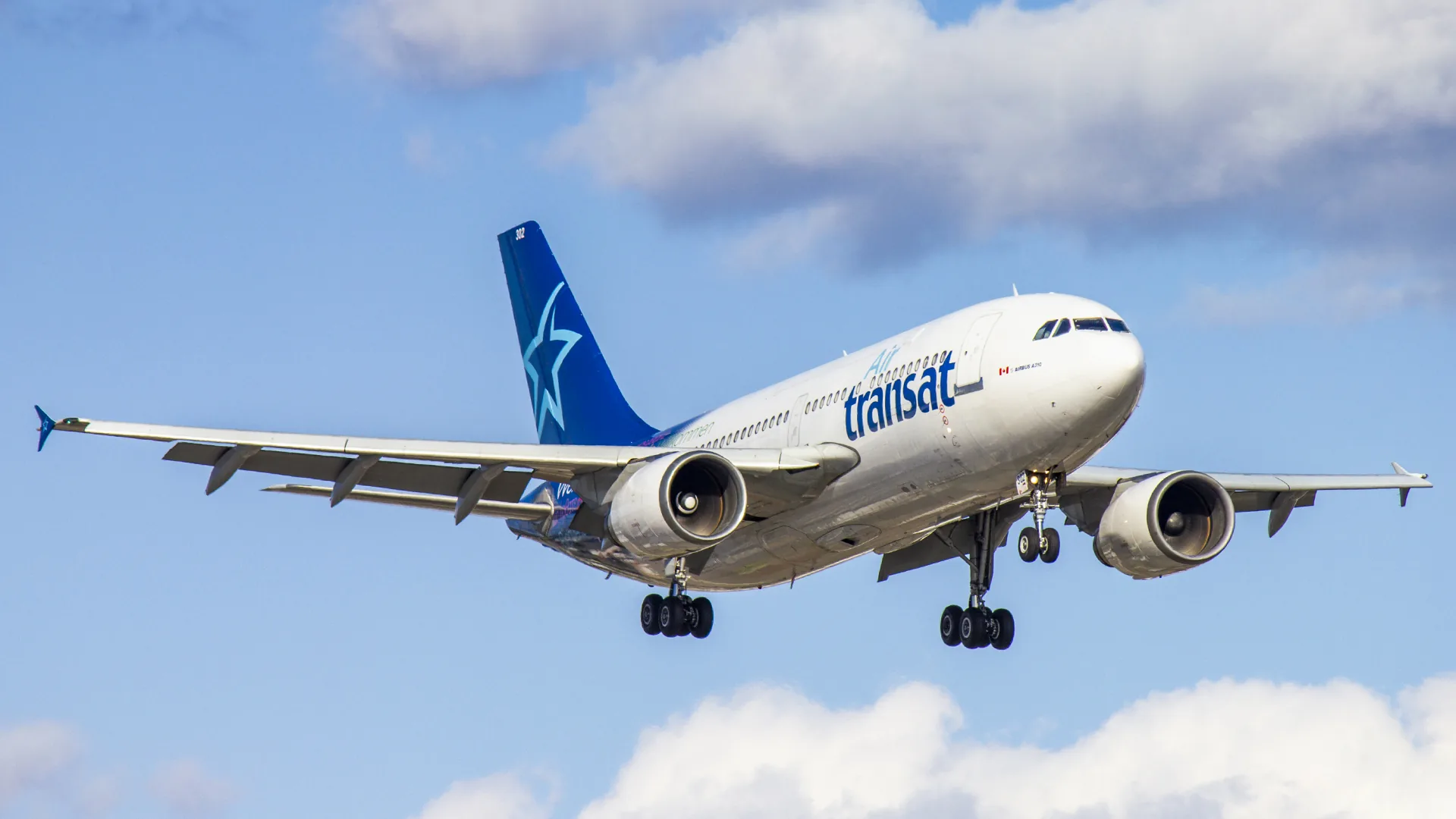
The A310 kept the A300's broad cabin but gave it fewer rows and a different wing. That combination explains its purpose: carry a smaller passenger load in a widebody, then give the later version enough fuel and weight capability to fly much farther.
Its two principal versions, the -200 and -300, have the same basic external dimensions. The important differences are in fuel, allowable weights and equipment. A tail tank on the -300 also makes the A310 a useful aircraft for understanding how fuel management can change both range and aerodynamic balance.
A smaller aircraft with a different wing
Airbus launched the A310 programme in 1978 following requirements from Lufthansa and Swissair. The first flight was on 3 April 1982. Lufthansa records the handover of the first aircraft to both airlines at Toulouse on 29 March 1983, giving a clear operator milestone distinct from the first flight. Airbus chronology, Lufthansa Group chronicle.
Removing fuselage length reduced the number of passengers the aircraft had to carry to fill its cabin. Retaining the wide cross-section preserved two aisles and space for two standard LD3 containers abreast beneath the cabin. That let an airline offer a smaller widebody while retaining compatible baggage and freight handling.
The wing was redesigned for the smaller aircraft. Airbus's programme retrospective explicitly identifies this change. Shortening a fuselage and redesigning its wing address separate problems: the former changes capacity and structural mass, while the latter changes the lifting surface that must carry the aircraft through its intended mission.
The A300 and A310 therefore share a cross-section without sharing every aerodynamic feature. Their commonality was valuable to airlines, but it should not obscure the A310's own design work.
A310-200 and -300: the useful variant map
| Version | Main role and changes | Examples of certified engine installations |
|---|---|---|
| A310-200 | Initial medium-range passenger aircraft | -203: CF6-80A3; -221: JT9D-7R4D1; -222: JT9D-7R4E1; -204: CF6-80C2A2 |
| A310-200C | Convertible passenger/freight aircraft | -203C: CF6-80A3; loading arrangement depends on the approved configuration |
| A310-300 | Increased fuel and weight capability; horizontal-stabiliser trim tank | -304: CF6-80C2A2; -322: JT9D-7R4E1; -324: PW4152; -325: PW4156A |
| Freighter conversions | Passenger airframes modified for main-deck cargo | Defined by the donor aircraft and approved conversion |
| MRTT and government transports | Specialist derivatives with mission equipment | Individual military or civil configurations |
The model-to-engine pairings are taken from EASA's A300/A310 data sheet. They show why “an A310 with Pratt & Whitney engines” is incomplete identification: JT9D and PW4000 installations are different. Likewise, the -300 designation describes a series; the last two digits help identify a particular model and engine combination.
The -300 also introduced wingtip fences. These affect the airflow near the wingtip, while its additional fuel capability addresses endurance and range. Neither change required a longer passenger fuselage. The two aircraft can look very similar in a side-on photograph.
Dimensions, seating and reference weights
Airbus's airport-planning manual gives an overall length of approximately 46.66 m and a span of approximately 43.9 m. Both series used a two-pilot flight crew. The familiar economy arrangement was eight abreast, usually 2-4-2.
| Reference item | A310-200 | A310-300 |
|---|---|---|
| Airbus standard single-class planning layout | 237 seats | 243 seats |
| Weight configuration used here | -203, WV04 | Basic WV00 |
| Maximum takeoff mass | 142,000 kg | 150,000 kg |
| Maximum landing mass | 121,500 kg | 123,000 kg |
| Maximum zero-fuel mass | 111,500 kg | 113,000 kg |
| Reference range graph engine | CF6-80A3 | CF6-80C2 |
| Cruise schedule in those graphs | Long-range cruise, 35,000/39,000 ft | Long-range cruise, 31,000/35,000/39,000 ft |
The -200 row uses the certified -203 WV04, matching the CF6-80A3 engine on the range curve. Other -200 models and weight variants have different landing and zero-fuel limits. For the -300, EASA also records higher-weight variants, including 164,000 kg takeoff mass. That later figure must be associated with its actual model and modifications.
Seats are similarly configuration-specific. The planning manual's 237 and 243 seats provide comparable manufacturer layouts. A historical Airbus two-class comparison used 220 seats. Exit arrangements, galleys and seat pitch can change the result, so a booking seat map should take precedence when the question concerns an actual flight. The manufacturer's historical comparison and its planning layouts describe different cabin assumptions.
Range: compare the same kind of mission
For the 142-tonne A310-200 with CF6-80A3 engines, Airbus's graph places its 237-passenger reference line at approximately 3,400 nm. For the 150-tonne A310-300 with CF6-80C2 engines, the 243-passenger line reaches approximately 4,200 nm. These are rounded readings from the manufacturer's curves, rather than advertised maxima for every A310.
Both use ISA conditions, long-range cruise and international reserves including 10% en-route flight time, an overshoot, a 200 nm diversion, 30 minutes holding at 1,500 ft, approach and landing. A310 planning manual, chapter 3.2.1, pages 5 and 7.
Those two cases explain the longer-range branch without borrowing the range of a later, heavier -300 and attaching it to the -200. They also leave room for airline-specific differences in empty mass and cabin fit. An aircraft with fewer premium seats is not necessarily carrying the same payload as the planning curve's passenger reference.
The tail tank changes a moment as well as a quantity
The A310-300's horizontal stabiliser contains an integral fuel tank. Its fuel management system can transfer fuel to control the aircraft's centre of gravity. Airbus identifies this centring role in its A310 history.
The mechanism begins with a simple fact: fuel has both mass and position. Transferring it aft changes the aircraft's balance even if the total fuel quantity remains constant. Within the aircraft's designed envelope, moving the centre of gravity aft can reduce the balancing force required from the horizontal tail in cruise. Reducing that force can reduce the associated trim drag.
This is different from burning fuel. Burning reduces aircraft mass; transferring changes where some of the remaining mass acts. A tank-content display and a total-fuel display therefore answer different questions. Total fuel describes the quantity on board; the distribution also helps explain the aircraft's balance.
The useful technical distinction is between a fuel-feed function and a centre-of-gravity control function. A complete system can perform both, with transfer logic and limits appropriate to the flight phase. The tail tank's aerodynamic benefit comes from controlled distribution, rather than from simply filling every tank.
A two-pilot cockpit and selected composite structures
The A310 helped establish Airbus cockpit commonality with the later A300-600. Displays and centralised systems monitoring supported a two-pilot crew instead of an independent flight-engineer station. The aircraft retained conventional control columns; it belongs to an earlier control-system generation than the A320 family.
Its material choices also need describing by component. Airbus records composite secondary structures on the -200 and a composite vertical tail on the -300 in its account of composite aircraft development. That does not make the A310 an aircraft with an all-composite fuselage. A fairing, a load-bearing fin and a complete fuselage are quite different structural applications.
One airframe's second career
A310-300 MSN489 provides a documented example of specialist reuse. Formerly operated by Air Comet, it joined Airbus in September 2003 and first flew as the MRTT boom demonstrator on 16 March 2006. Its remotely controlled refuelling boom was deployed in flight in January 2007. Airbus reported its retirement as a test bed in September 2024 after 353 test flights. Airbus's test-bed history.
The boom had its own flight controls, electrical actuators and operator console. These were modifications to a particular airframe. Their presence does not mean an airline A310 was delivered with tanker capability. The later A330 MRTT programme inherited the research, while using a larger platform.
A310 questions answered
Is the A310 just a shorter A300?
It is shorter and shares the broad fuselage cross-section, but it also has a redesigned wing and other changes. Cabin capacity explains only part of the difference between the two aircraft.
What distinguishes the A310-300 from the -200?
The -300 increased fuel and weight capability for longer routes and added a trim tank in the horizontal stabiliser. Its basic fuselage length remained the same. Actual takeoff weights and engines depend on the model and weight variant.
How many seats does an A310 have?
Airbus used 237 seats for a standard single-class -200 planning layout and 243 for the -300. Its historical two-class family comparison used 220. An airline's approved layout may differ from all three.
Why is there fuel in the tail?
On the -300, the horizontal-stabiliser tank adds fuel capability and allows fuel distribution to control balance. Moving fuel aft can reduce the tail's required balancing force and trim drag in cruise. The system manages that movement within its designed limits.
Did the A310 use the same engines as the A300?
Some later A300s and A310s used related CF6-80C2 or PW4000 engine families, but their exact installations differed. The A310 also used CF6-80A3 and JT9D-7R4 models. A full model designation is more informative than the manufacturer's name alone.