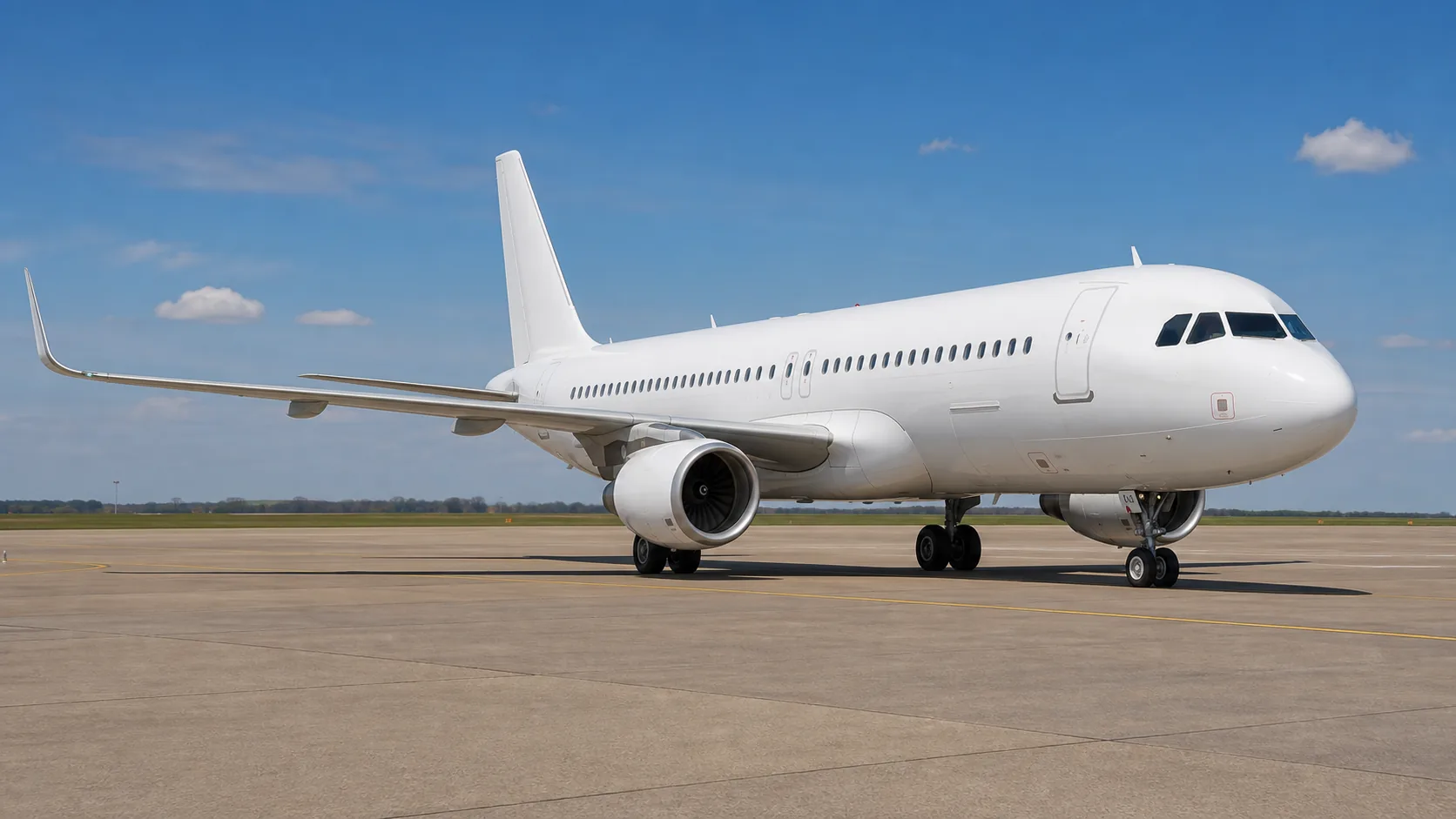
The Airbus A320 family is the benchmark Airbus single-aisle family. It covers the A318, A319, A320 and A321, plus the later neo generation. The family is used on dense domestic routes, European and Asian trunk sectors, low-cost networks, business shuttle routes and, in A321LR/XLR form, long thin transatlantic and medium-haul missions.
History and development
Airbus launched the A320 programme in the 1980s to challenge the Boeing 737 and McDonnell Douglas DC-9/MD-80 market with a modern two-crew flight deck, efficient wing and digital fly-by-wire controls.
The A320 entered airline service with Air France in 1988. The stretched A321 followed for higher-capacity routes, while the shorter A319 and A318 were aimed at thinner or performance-sensitive sectors.
The A320neo generation added new engines and sharklets, keeping the same basic family logic while improving fuel burn, range and airline commonality.
Variant-by-variant breakdown
| Variant | What it is used for |
|---|---|
| A318 | Shortest member of the family, typically used where A320-family commonality mattered more than seat cost. Its niche included steep-approach operations such as London City, but production remained limited. |
| A319 | Shorter A320-family variant for thinner routes, corporate conversions and airports where range or runway performance mattered more than capacity. |
| A320 | Core member of the family and the most recognisable balance of capacity, range and operating cost for short- and medium-haul airline work. |
| A321 | Stretched high-capacity variant. The A321neo, A321LR and A321XLR turned the family into a serious long thin route aircraft. |
Technical specifications
These figures are public-reference values and vary by sub-variant, engine, weight option and operator configuration.
| Variant | Capacity / weight | Range / performance | Engines / configuration |
|---|---|---|---|
| A318 | 107-132 typical seats | Up to about 3,200 nm | CFM56-5B or PW6000 |
| A319 | 124-156 typical seats | Up to about 3,750 nm | CFM56-5A/B or IAE V2500; neo with LEAP/PW1100G |
| A320 | 150-186 typical seats | Up to about 3,300 nm | CFM56-5A/B or IAE V2500; neo with LEAP/PW1100G |
| A321 | 185-230 typical seats | Up to about 4,700 nm for XLR | CFM56/V2500 on ceo; LEAP/PW1100G on neo |
Cabin, route role and operating profile
| Area | Typical setup | Operational meaning | Notes |
|---|---|---|---|
| Cabin layout | Single aisle | Six-abreast economy | Known for a wider cabin than older 737 generations |
| Cockpit | Two pilots | Common A320-family type rating | Side-stick fly-by-wire flight deck |
| Typical network | Short/medium haul | High-frequency airline sectors | A321LR/XLR extends the mission |
Design and systems features
- Digital fly-by-wire controls and flight envelope protections were the signature break from earlier narrowbody design.
- ECAM centralises system monitoring and abnormal procedure support in a way that shaped later Airbus cockpits.
- The family strategy is commonality: airlines can mix A319, A320 and A321 capacity while keeping training and maintenance overlap.
- Sharklets and new-generation engines on neo variants changed the economics without requiring a clean-sheet aircraft.
Typical operations, routes and operators
- A320-family aircraft dominate European, Indian, Chinese, Middle Eastern and low-cost carrier networks because the cabin size fits dense short sectors.
- A319s still appear where smaller capacity or performance margins are useful, but many airlines have upgauged to A320neo, A321neo or A220/E2 alternatives.
- A321LR and XLR missions are changing single-aisle network planning by replacing some widebody or 757-style routes.
Market presence and replacement context
- The A320 competes directly with the Boeing 737 family. The A321neo has become especially strong where airlines want narrowbody economics with near-757 range.
- The A318 largely lost its place to more efficient small aircraft, including the A220, while the A319neo remains more niche than the A320neo and A321neo.
Safety record and operational lessons
- The A320 family has accumulated a very large global service record. Public safety lessons are less about one airframe defect and more about energy management, automation monitoring, weather decisions, runway excursions and go-around discipline.
- Because the aircraft is highly automated, strong operators train crews to understand mode awareness rather than simply rely on the flight guidance system.
Comparison with similar aircraft
| Aircraft | Where it competes | Practical difference |
|---|---|---|
| Boeing 737 NG/MAX | Closest direct competitor | Similar route role; Airbus offers FBW/ECAM philosophy while Boeing keeps a more conventional control feel. |
| Airbus A220 | Smaller/thinner route alternative | Better fit below A320 size, especially where five-abreast comfort and lower trip cost matter. |
| Boeing 757 | Long-range narrowbody predecessor | A321LR/XLR increasingly covers many missions once associated with the 757. |
FAQ
What is the main A320 family difference?
The family uses a shared Airbus cockpit philosophy but changes capacity and range through fuselage length, fuel, engine and weight options.
Is the A321 replacing widebodies?
Not generally on dense long-haul routes, but A321LR/XLR aircraft can replace widebodies on thinner medium-haul and long thin routes.
Why did the A318 sell poorly?
Its seat cost and timing made it less attractive than larger A320-family variants and later the A220.
Public sources and disclaimer
This article is an editorial aircraft profile. It is not official aircraft training material and must not replace an AFM, POH, FCOM, QRH, MEL, operator SOP, maintenance manual, regulator document or current type certificate data sheet.
- Airbus A320 family official information
- Airbus A320 aircraft characteristics
- EASA type certificate database