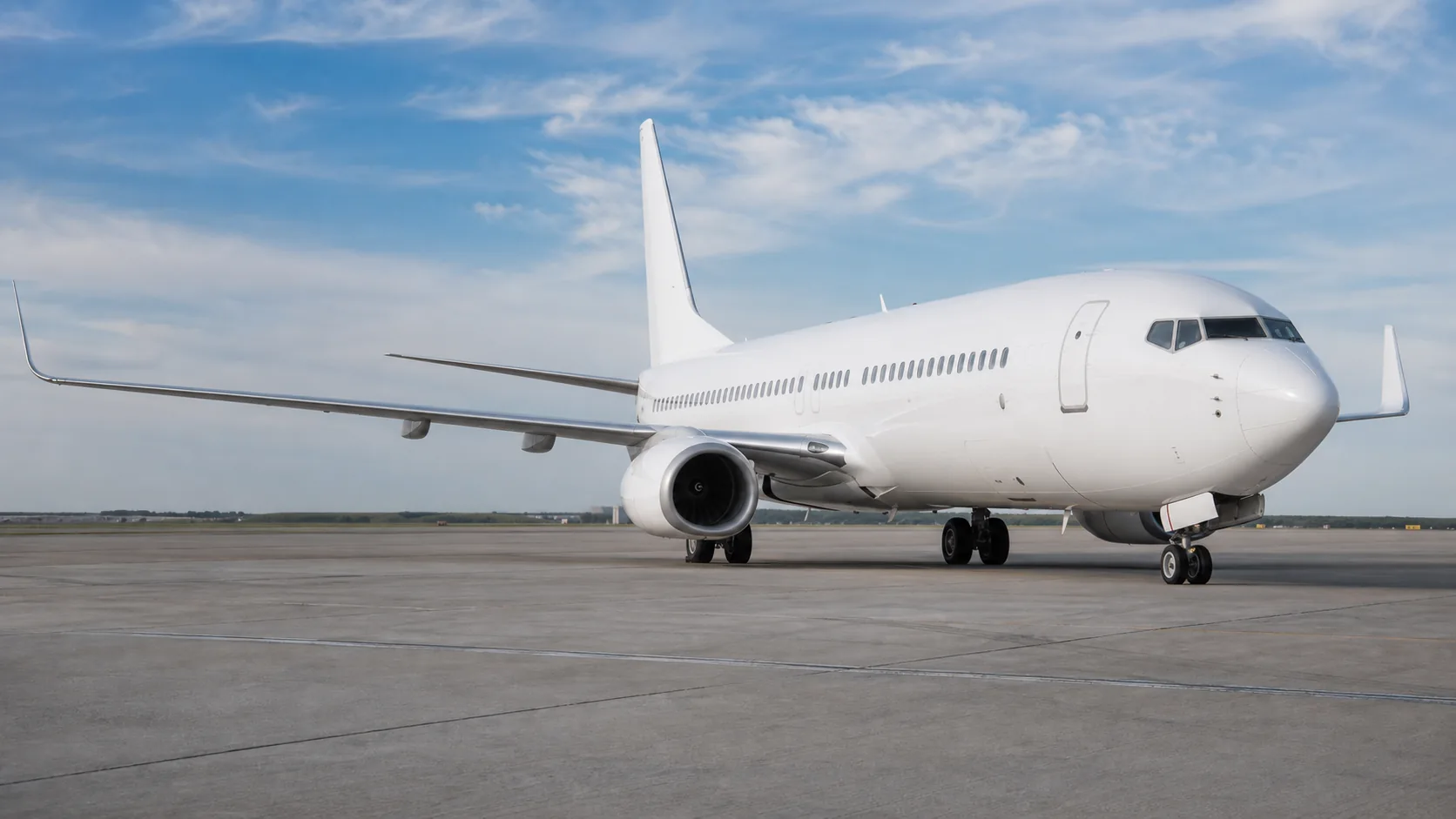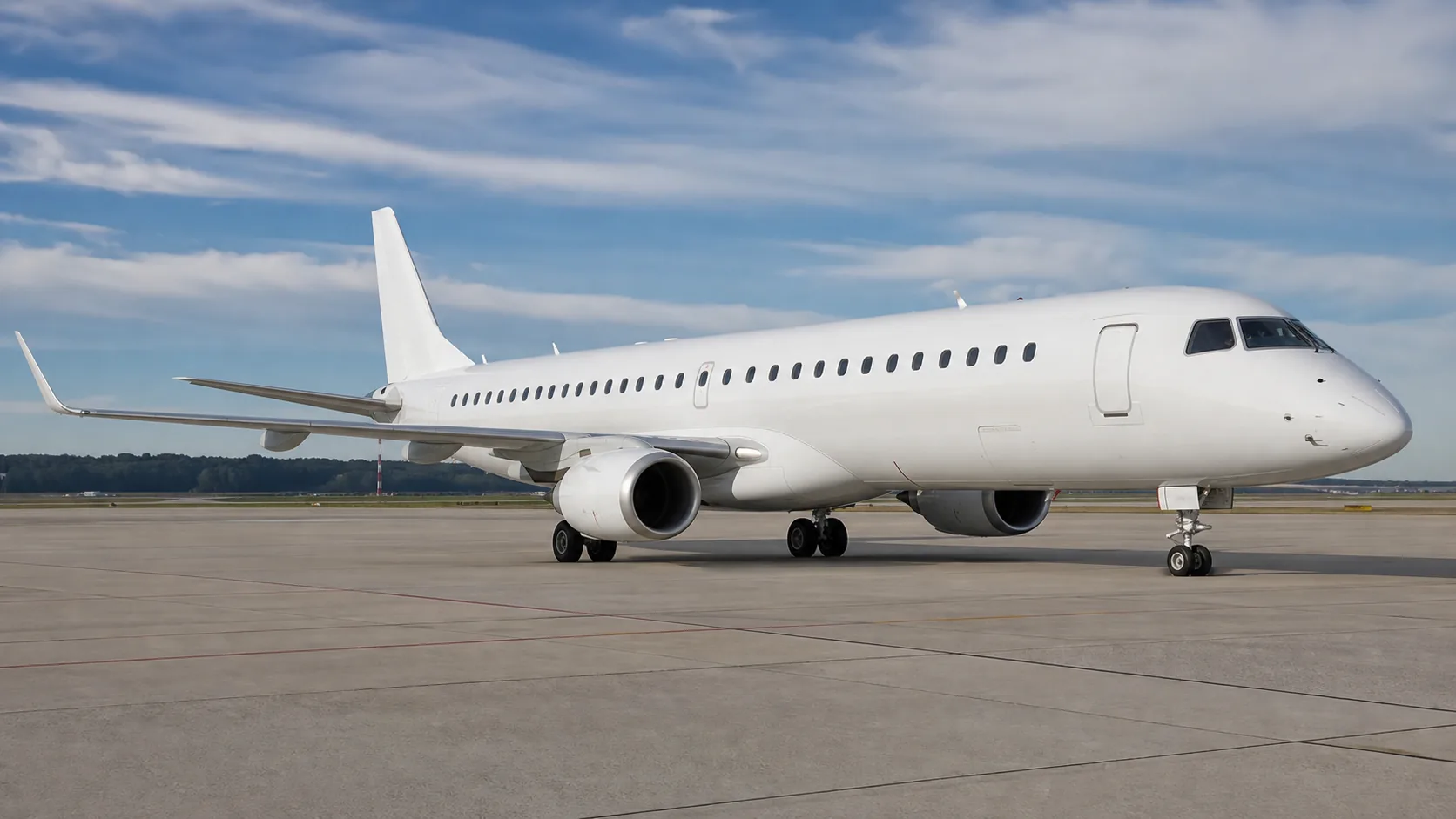
The Embraer E190 and E195 are the larger members of the first-generation E-Jet family. They were designed to give airlines a mainline-feeling cabin and jet performance in a smaller capacity band than the Airbus A320 or Boeing 737.
History and development
Embraer built the E-Jets to move beyond traditional small regional jets. The E170/E175 served the lower capacity range, while the E190/E195 targeted routes too thin for a full-size narrowbody but too large or premium for older 50-seat jets.
The E190 entered service first and became popular with airlines needing frequency and right-sized capacity. The E195 stretched the concept for denser short-haul sectors.
The E2 generation later brought new wings, Pratt & Whitney geared turbofans and a revised efficiency story, especially for the E195-E2.
Variant-by-variant breakdown
| Variant | What it is used for |
|---|---|
| E190 | Typically around 96-114 seats, used for business routes, regional trunk sectors and mainline thin markets. |
| E195 | Stretched first-generation E-Jet, generally used where E190 economics are attractive but more seats are needed. |
| E190-E2 | New-generation update with new wing, engines and systems refinements. |
| E195-E2 | Largest E-Jet, competing with the A220-300 and smaller A320/737 missions. |
Technical specifications
These are manufacturer reference figures, with the variant and assumptions shown where available. Typical layouts, maximum seating and advertised range describe different things. Ranges quoted by different manufacturers are not necessarily calculated on the same payload or reserve basis; use the exact approved documentation for flight planning.
| Variant / reference | Seating / weight | Published reference | Powerplant / layout |
|---|---|---|---|
| E190, first generation | Approximately 100-seat class; layouts up to 114 | Conventional CF34-powered E-Jet generation | GE CF34-10E |
| E195, first generation | Approximately 110-seat class; layouts up to 124 | Stretched first-generation E-Jet | GE CF34-10E |
| E190-E2 | Published layouts: 97, 106 or 114 seats | Reference full-passenger range: 2,950 nm, LRC, typical reserves and 100 nm alternate | Pratt & Whitney PW1900G |
| E195-E2 | 120-seat three-class / 132-seat single-class examples; high-density up to 146 | Reference full-passenger range: 3,000 nm, LRC, typical reserves and 100 nm alternate | Pratt & Whitney PW1900G |
Cabin, route role and operating profile
| Area | Typical setup | Operational meaning | Notes |
|---|---|---|---|
| Cabin | Single aisle | 2-2 economy seating | No middle seats in standard layout |
| Route role | Regional/mainline crossover | Thin business routes | Frequency-driven networks |
| Cockpit | Two pilots | EICAS/glass cockpit | Family commonality with smaller E-Jets |
Design and systems features
- The 2-2 cabin is central to the E-Jet appeal because it gives regional routes a less cramped passenger experience.
- The E190/E195 size band lets airlines keep frequency without flying half-empty A320s or 737s.
- E2 variants improve the economics with new engines and wings while keeping the same basic market logic.
Typical operations, routes and operators
- E190s appear on business routes, regional subsidiaries, wet-lease fleets and mainline networks that need right-sized aircraft.
- E195s and E195-E2s are strong on denser short routes where seat cost matters but a full-size narrowbody is still too much aircraft.
- The family is especially useful for airports with demand fragmentation, slot limits or premium passenger expectations.
Market presence and replacement context
- The E190/E195 competes with the Airbus A220, A319, smaller 737 variants and regional jets such as the CRJ900.
- The E195-E2 is the most direct challenge to the A220-300 in the 120-150 seat category.
Operational themes for study
- Distinguish the original E-Jets from E2 systems, engines and training requirements before discussing a specific aircraft.
- Approach preparation, automation monitoring and short-sector workload are useful interview themes; this profile does not calculate accident rates or rank family safety.
Comparison with similar aircraft
| Aircraft | Where it competes | Practical difference |
|---|---|---|
| Airbus A220 | Small-mainline comparison | Five-abreast A220 cabin versus four-abreast E-Jets; compare exact versions and payload/range data. |
| CRJ900 | Regional jet comparison | Different fuselage, engine installation and seating-capacity band. |
| A319 / 737-700 | Larger single-aisle comparison | Six-abreast cabins and different fleet-commonality arrangements. |
FAQ
Is the E190 a regional jet?
It is often called a regional jet, but many operators use it like a small mainline narrowbody.
What is the main E190 vs E195 difference?
The E195 is stretched for more seats; the E190 is better suited to thinner routes.
Why is the E195-E2 important?
It gives airlines a modern 120-150 seat option with strong fuel economy and no-middle-seat cabin layout.
Check your understanding
- How do E1 and E2 engine installations and seating references differ?
- Why should the published E2 range be read together with its payload, reserves and alternate assumptions?
Continue your preparation
- Airbus A220 explained: the small single-aisle built around efficiency
- Bombardier CRJ Series explained: from CRJ200 to CRJ1000
- ATR 72 explained: the regional turboprop built for short routes
- Browse all aircraft profiles
- Explore interview preparation topics
Public sources and disclaimer
Manufacturer references checked on 18 October 2026.
This article is an editorial aircraft profile. It is not official aircraft training material and must not replace an AFM, POH, FCOM, QRH, MEL, operator SOP, maintenance manual, regulator document or current type certificate data sheet.
- Embraer E190 product information
- Embraer E195 product information
- Embraer E190-E2 specification sheet
- Embraer E195-E2 product page and specification download
- Embraer E195-E2 cabin update and maximum seating