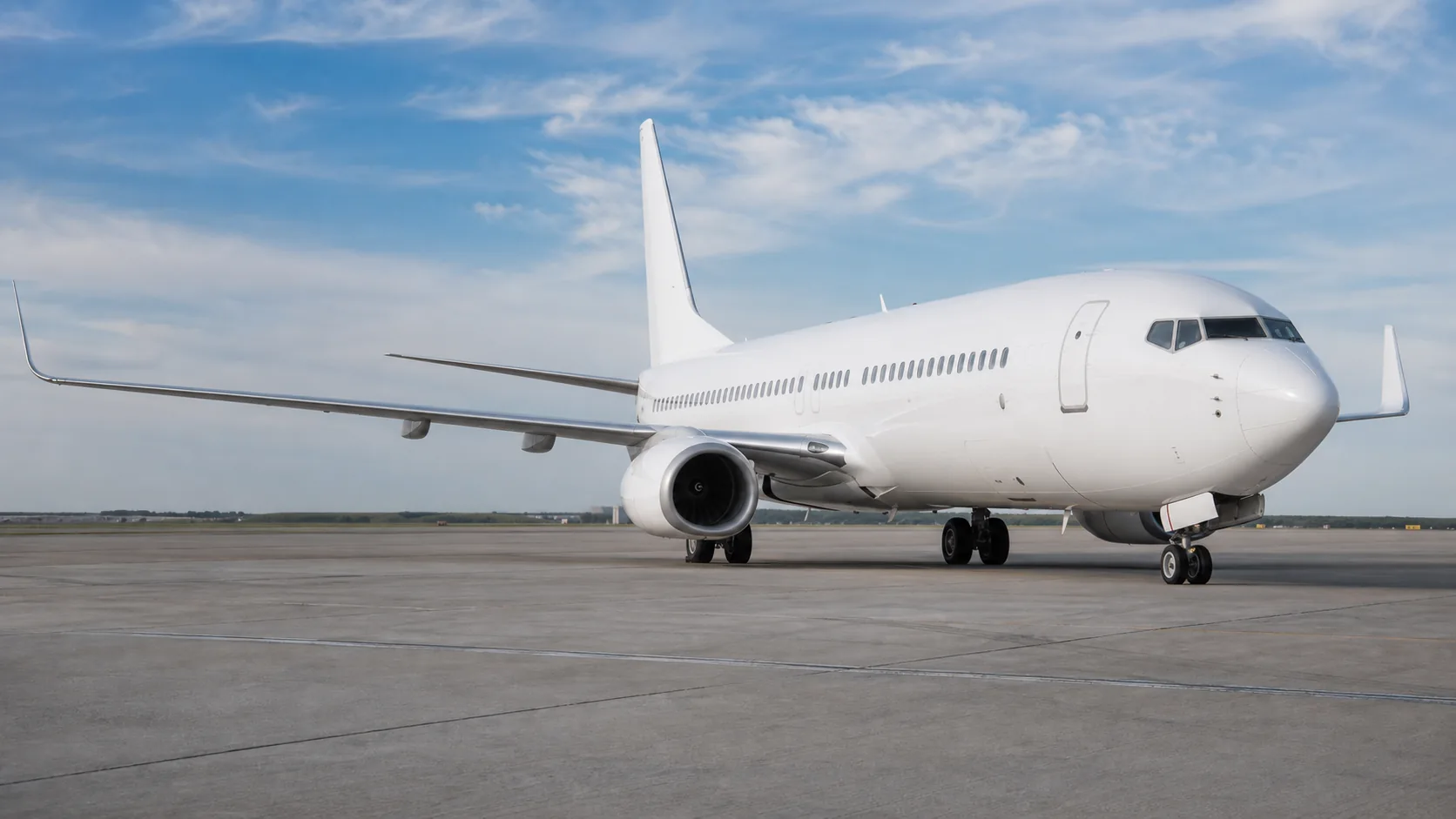
The Boeing 737 is a single-aisle twinjet family built around high utilisation, fast turnarounds and short- to medium-haul airline economics. It spans early low-bypass models, the Classic generation, the 737 Next Generation and the re-engined 737 MAX.
History and development
The 737 first flew in the 1960s as a smaller partner to Boeing's 707 and 727, using a six-abreast fuselage and a low-to-the-ground layout suited to airports with limited ground equipment.
The Classic series modernised engines and avionics for the 1980s and 1990s. The Next Generation family then brought a new wing, more fuel, better range and variants such as the 737-700, 737-800 and 737-900.
The 737 MAX added CFM LEAP-1B engines, aerodynamic updates and cockpit changes while preserving a high degree of airline commonality with earlier 737 fleets.
Variant-by-variant breakdown
| Variant | What it is used for |
|---|---|
| 737 Classic | The -300/-400/-500 generation uses CFM56-3 engines and predates the NG wing and flight deck. |
| 737 NG | The -600/-700/-800/-900 generation uses CFM56-7B engines; the -800 is a widely used passenger and conversion platform. |
| 737 MAX 8/9 | Re-engined variants with LEAP-1B engines, revised aerodynamics and MAX-specific systems and training requirements. |
| 737 MAX 7/10 | Smaller and larger MAX family members listed in Boeing's product data. Product specifications do not establish certification, delivery or airline entry-into-service status. |
Technical specifications
These are manufacturer reference figures, with the variant and assumptions shown where available. Typical layouts, maximum seating and advertised range describe different things. Ranges quoted by different manufacturers are not necessarily calculated on the same payload or reserve basis; use the exact approved documentation for flight planning.
| Variant / reference | Seating / weight | Published reference | Powerplant / layout |
|---|---|---|---|
| 737-700 | 125-145 two-class seats | Up to 2,900 nm | CFM56-7B |
| 737-800 | 160-180 two-class seats | Up to 2,800 nm | CFM56-7B |
| 737 MAX 8 | 160-180 two-class seats | Up to 3,500 nm | CFM LEAP-1B |
| 737 MAX 10 | 185-210 two-class seats | Up to 3,100 nm | CFM LEAP-1B |
Cabin, route role and operating profile
| Area | Typical setup | Operational meaning | Notes |
|---|---|---|---|
| Cabin layout | Single aisle | Six-abreast economy | High-density operators often use 189+ seats |
| Cockpit | Two pilots | Conventional Boeing logic | NG/MAX keep strong family continuity |
| Network role | Short/medium haul | Domestic, leisure and regional international | Major low-cost carrier workhorse |
Design and systems features
- The 737's low ground clearance shaped engine installation, landing gear geometry and airport handling for the entire family.
- The NG wing and CFM56-7B engines made the 737-800 a strong economic competitor to the A320ceo.
- The MAX uses newer engines and aerodynamic refinements while keeping a cockpit philosophy familiar to 737 operators.
Typical operations, routes and operators
- The 737 is used heavily by low-cost carriers, network airlines, charter operators, cargo carriers and government/military derivatives.
- The 737-800 is common on dense domestic and regional international sectors; MAX variants increasingly take over new deliveries and longer single-aisle missions.
- Cargo conversions keep older 737s relevant after passenger service, especially on express and regional freight networks.
Market presence and replacement context
- The 737 competes most directly with the Airbus A320 family. Fleet choice often depends on existing training, maintenance scale, delivery slots and financing rather than one isolated performance figure.
- MAX grounding and return-to-service history made regulator oversight and flight control transparency central to the modern 737 story.
Operational themes for study
- Study the differences between Classic, NG and MAX systems and the associated training requirements. Family commonality does not make operating procedures interchangeable.
- For interview discussion, connect energy management and automation monitoring to the exact aircraft and operator documentation, rather than making an unsupported safety ranking.
Comparison with similar aircraft
| Aircraft | Where it competes | Practical difference |
|---|---|---|
| Airbus A320 family | Single-aisle alternative | Different flight-control and cockpit philosophies; exact variant and airline configuration matter. |
| Airbus A220 | Smaller-capacity alternative | Five-abreast cabin rather than the 737's six-abreast cabin. |
| Boeing 757 | Larger narrowbody comparison | Different engines, wing and performance envelope; compare like-for-like payload and runway conditions. |
FAQ
Which 737 is most common?
The 737-800 became the dominant NG passenger variant; the MAX 8 is the core MAX model.
Is the 737 MAX the same as the 737 NG?
No. It preserves 737 commonality but uses different engines, aerodynamic changes and MAX-specific systems/training requirements.
Why do airlines still choose the 737?
Fleet scale, airport compatibility, high utilisation, common training and strong operating economics keep the family attractive.
Check your understanding
- How would you distinguish Classic, NG and MAX by engine family and generation?
- Why does a shared family name not make flight-control training interchangeable?
Continue your preparation
- Airbus A320 Family explained: A318, A319, A320 and A321
- Airbus A220 explained: the small single-aisle built around efficiency
- Boeing 757 and 767 explained: the twinjet pair that bridged narrowbody and widebody flying
- Browse all aircraft profiles
- Explore interview preparation topics
Public sources and disclaimer
Manufacturer references checked on 18 October 2026.
This article is an editorial aircraft profile. It is not official aircraft training material and must not replace an AFM, POH, FCOM, QRH, MEL, operator SOP, maintenance manual, regulator document or current type certificate data sheet.
- Boeing 737 Next Generation specifications
- Boeing 737 MAX specifications
- Boeing airport planning manuals