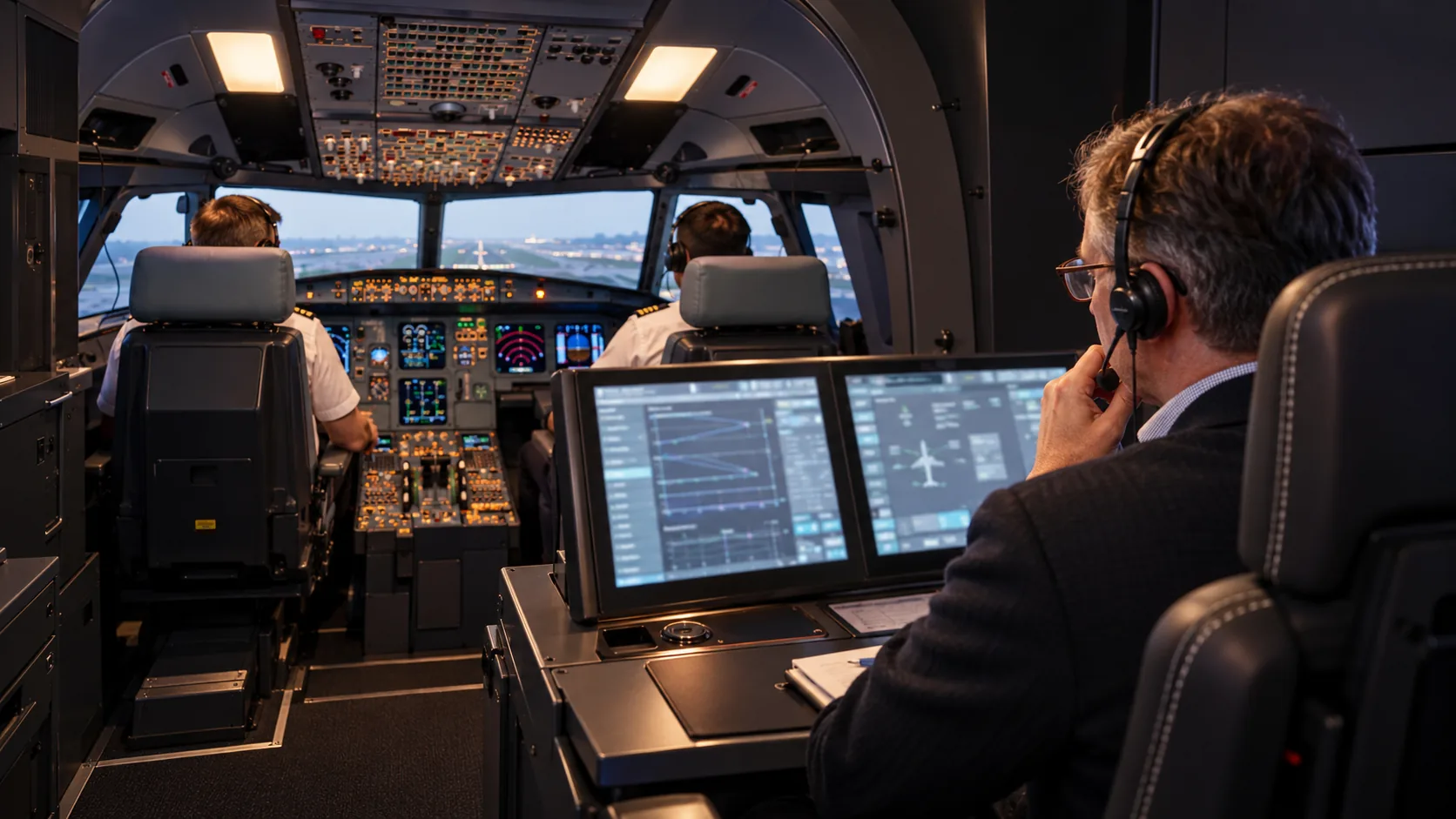
For unstable approach interview questions, state the deviation and the decision it requires under the operator's stabilisation policy. The scenario below begins with a late vector that leaves the aircraft high and fast. Work through it as pilot flying, then as pilot monitoring.
Use the current aircraft and operator procedures for the exact criteria, calls and manoeuvres. Identify the applicable reference before quoting a limit.
Unstable approach interview questions and the decision gate
A stabilisation gate is useful only when you know the criteria associated with it. Explain what the crew checks, what happens when the criteria remain unmet and how you continue monitoring after passing the gate.
Airbus describes stabilisation criteria as guidance for operators to define their policies. See Prevention of Unstable Approaches, then use the policy relevant to the aircraft and operator in the question.
When discussing an approach, consider the flight path, speed and energy state together. Include configuration, thrust and checklist status where the applicable policy requires them. Avoid presenting a familiar altitude or tolerance as a universal rule.
A scenario to practise before the gate
Fictional scenario: a late vector leaves the aircraft high and fast. There is still time before the operator's stabilisation gate. The crew is completing the approach setup and the workload is rising.
Pause here and answer as pilot flying. Explain the trend you identify, the options permitted by the applicable procedures and the information you need. State how you keep the other pilot involved and what would cause you to discontinue the approach.
Repeat as pilot monitoring. Describe the deviation you would call, the trend you continue watching and the support you provide. Use the actual standard callouts when practising for an aircraft you know. For an unfamiliar operator, explain the required communication principle and identify the procedure you would confirm.
If you say “I would correct it”, specify the correction and the point at which the approach must be discontinued.
Change one fact at the gate
Continue the fictional scenario: the required stabilisation criteria remain unmet at the operator's gate. Explain the go-around decision and the applicable crew actions. Then describe how you manage the next phase.
Separate these parts of the explanation:
| Part | What your answer should establish |
|---|---|
| Decision and call | The relevant condition and the required announcement under SOPs. |
| Aircraft manoeuvre | The approved go-around actions and PF/PM task sharing. |
| Guidance and navigation | The active modes, intended flight path and applicable clearance or missed-approach procedure. |
| Subsequent plan | Communication, reassessment and preparation for the next safe option. |
The aircraft manoeuvre and the navigation procedure require distinct attention. “Follow the published go-around” is too vague to show that you understand both. Explain the operation relevant to the scenario without inventing a clearance.
A concise answer structure
An interview response can follow this pattern:
I would compare the approach with the operator's stabilisation criteria and call a developing deviation early. If the required criteria remain unmet at the applicable gate, I would make the required go-around call and carry out the SOP actions. I would maintain clear PF/PM task sharing, verify the guidance and flight path, then reassess the next approach or other landing option.
Adapt that wording to the facts and your role. If asked about a later destabilisation, explain the applicable discontinuation policy and response. Do not treat an earlier stable check as permission to stop monitoring.
Show crew coordination in the debrief
In the debrief, identify the earliest sign that the aircraft was high or fast. Discuss whether both pilots recognised it and whether the calls led to a timely decision.
Use these prompts:
- Which deviation was recognised first?
- Was the call clear enough for the other pilot to act?
- What action protected the decision margin?
- Which preparation would reduce the workload on another approach?
Use a genuine experience if the interviewer asks for one. Explain your actual role and what you learned. A routine event can demonstrate good judgement when its details are clear.
Review the available simulator assessment questions to rehearse these explanations. The CRM interview topics can help you structure an honest account of your contribution.
Source and scope
The Airbus reference above was checked on 18 October 2026. It supports the discussion of stabilisation policy; this article is interview preparation and does not replace current aircraft manuals or operator procedures. Use those documents for actual criteria and operational actions.
Final run through the approach
Rehearse the PF and PM responses to the same late vector. Check that you cover the aircraft manoeuvre and the flight path after the go-around call.
For further simulator assessment and CRM questions with model answers, compare YPI membership options.