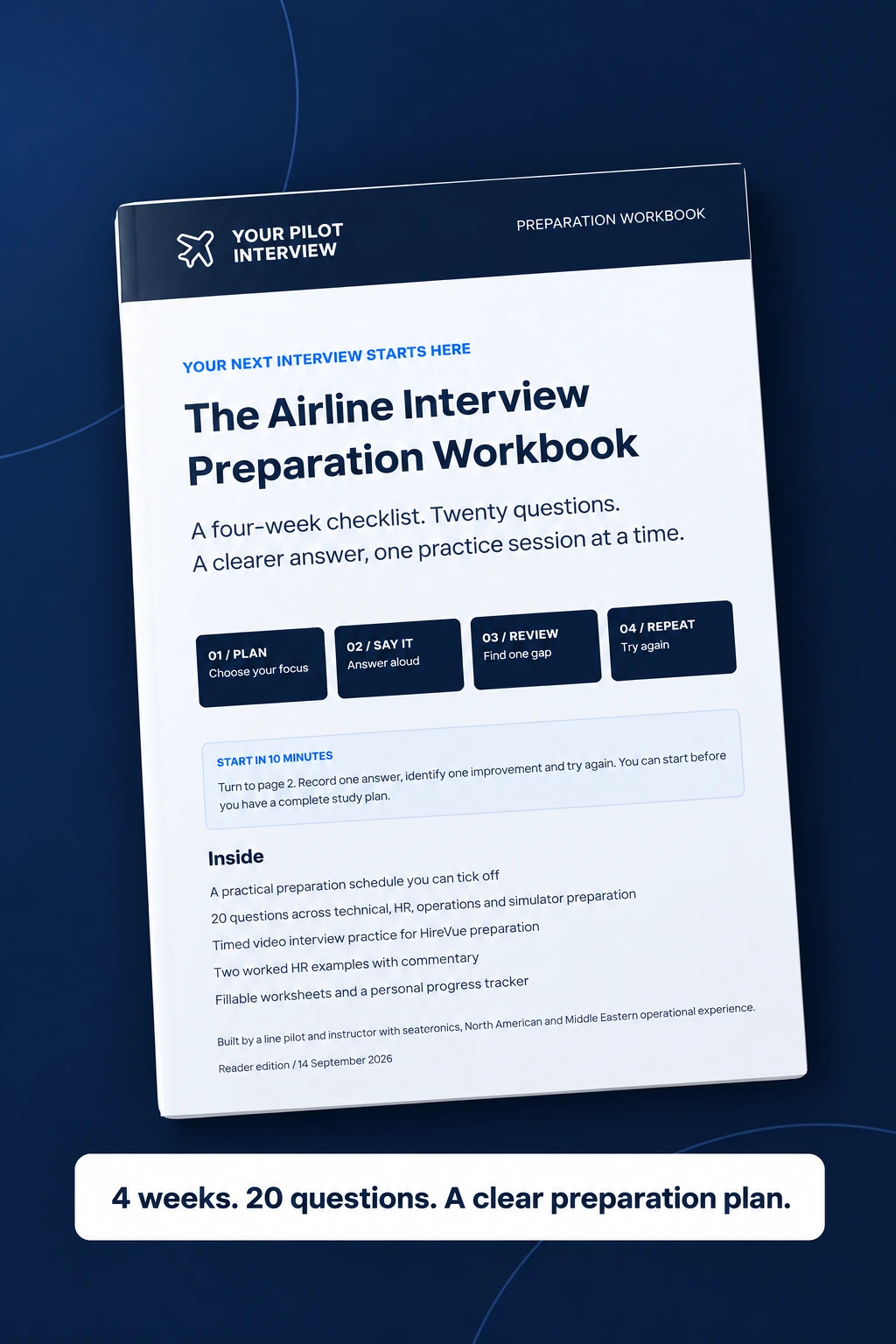
Take your preparation offline
20 questions to practise offline.
Free 31-page PDF with model answers, examiner tips and a 4-week preparation plan.
Aircraft systems and operational questions, including A320 and B737 routes.
The 737NG anti-ice system protects several critical components using both pneumatic and electrical means:
Note: The wing anti-ice system does not include the outboard slats or the leading edge flaps. It is effective with the slats in any position.
Yes, the wing anti-ice system is available on the ground, but only under specific conditions:
When these conditions are met, positioning the WING ANTI-ICE switch to ON opens both control valves.
Compare the access plans to open the complete answer library for your selected period.
Compare access plansCompare the access plans to open the complete answer library for your selected period.
Compare access plansAutomatic load shedding is a protection feature designed to prevent electrical overload when operating on a single generator or under limited power conditions.
It occurs in the following situations:
Manual restoration of galley and main bus power can be attempted by toggling the CAB/UTIL Power Switch OFF then ON
APU operation (in flight, APU as sole source):
Note: Load shedding helps prioritize essential systems by temporarily disabling non-essential loads.
The Mach trim system provides speed stability at higher Mach numbers. Above Mach 0.615, it automatically adjusts the elevators relative to the stabilizer to compensate for Mach tuck.
The system uses Mach data from the ADIRU to determine the required adjustment. A Mach trim actuator repositions the elevator feel and centering unit, effectively modifying the neutral position of the control column as speed increases.
Hydraulic system B powers the following components:
- Ailerons
- Rudder
- Elevators and elevator feel
- Two flight spoilers per wing
- Leading edge flaps and slats
- Trailing edge flaps
- Normal brakes
- No. 2 thrust reverser
- Autopilot B
- Alternate nose wheel steering
- Landing gear transfer unit
- Autoslats
- Yaw damper
Autobrake disarms automatically when:
- Manual brakes are applied
- Speedbrake lever is moved to the down detent
- Advancing the forward thrust lever(s), except during the 3 first seconds after touchdown
- System fault occurs
Take your preparation offline
Free 31-page PDF with model answers, examiner tips and a 4-week preparation plan.