Take your preparation offline
20 questions to practise offline.
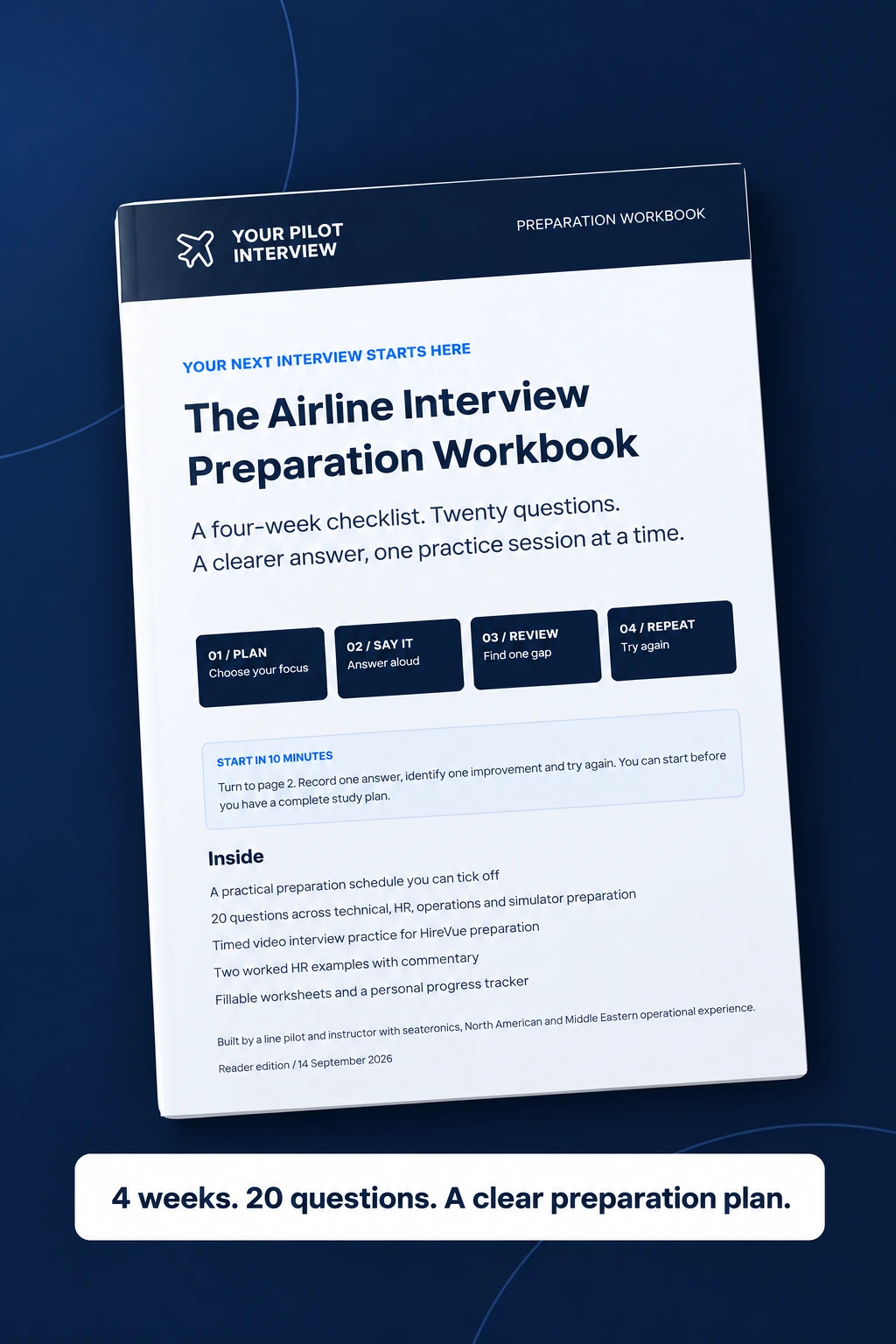
Free 31-page PDF with model answers, examiner tips and a 4-week preparation plan.
CV writing, cover letters, and application best practices.
Relevant licence and ratings, medical status where requested, flight experience, recent employment, training and contact details. Match the vacancy's requirements and keep dates and terminology consistent.
State the date of the totals and clearly label categories such as total time, PIC, multi-engine and instrument time. Identify simulator time separately and reconcile figures with your logbook and application form.
In today’s competitive aviation job market, a strong CV isn’t a luxury — it’s a necessity. Your CV is more than a document — it’s your first impression, your personal briefing to airline recruiters. Whether you're a newly rated First Officer or a seasoned pilot exploring new opportunities, your CV must clearly reflect your readiness, your qualifications, and your potential to operate safely and effectively within a professional flight crew.
Unlike other industries, aviation recruiters are trained to scan for operational details in seconds: license status, recency, type ratings, hours, language proficiency, and training pedigree. A generic or cluttered CV won’t make it past the first filter — human or automated.
This guide is designed to help you craft a pilot CV that gets noticed — by both recruiters and Applicant Tracking Systems (ATS). Whether your goal is to fly for a low-cost carrier, a national airline, or a private jet operator, you’ll learn to format your experience for maximum impact — and avoid the common mistakes that cost candidates interviews.
Let’s build a CV that gets you to the next stage: the interview.
While your CV provides factual, structured details about your qualifications, your cover letter tells your story. It is your opportunity to explain why you're applying, what you bring beyond hours and licenses, and why this airline in particularfits your career goals.
In the aviation world, hiring decisions are based not only on technical skill but also on cultural fit, communication ability, and operational maturity. A well-crafted cover letter gives recruiters insight into who you are as a crew member — not just as a candidate.
Why airlines care about cover letters:
In a few short paragraphs, you must:
A strong cover letter can turn a standard application into a standout one. It's not about quantity — it's about relevance, clarity, and authenticity.
Compare the access plans to open the complete answer library for your selected period.
Compare access plansCompare the access plans to open the complete answer library for your selected period.
Compare access plansTake your preparation offline
Free 31-page PDF with model answers, examiner tips and a 4-week preparation plan.